
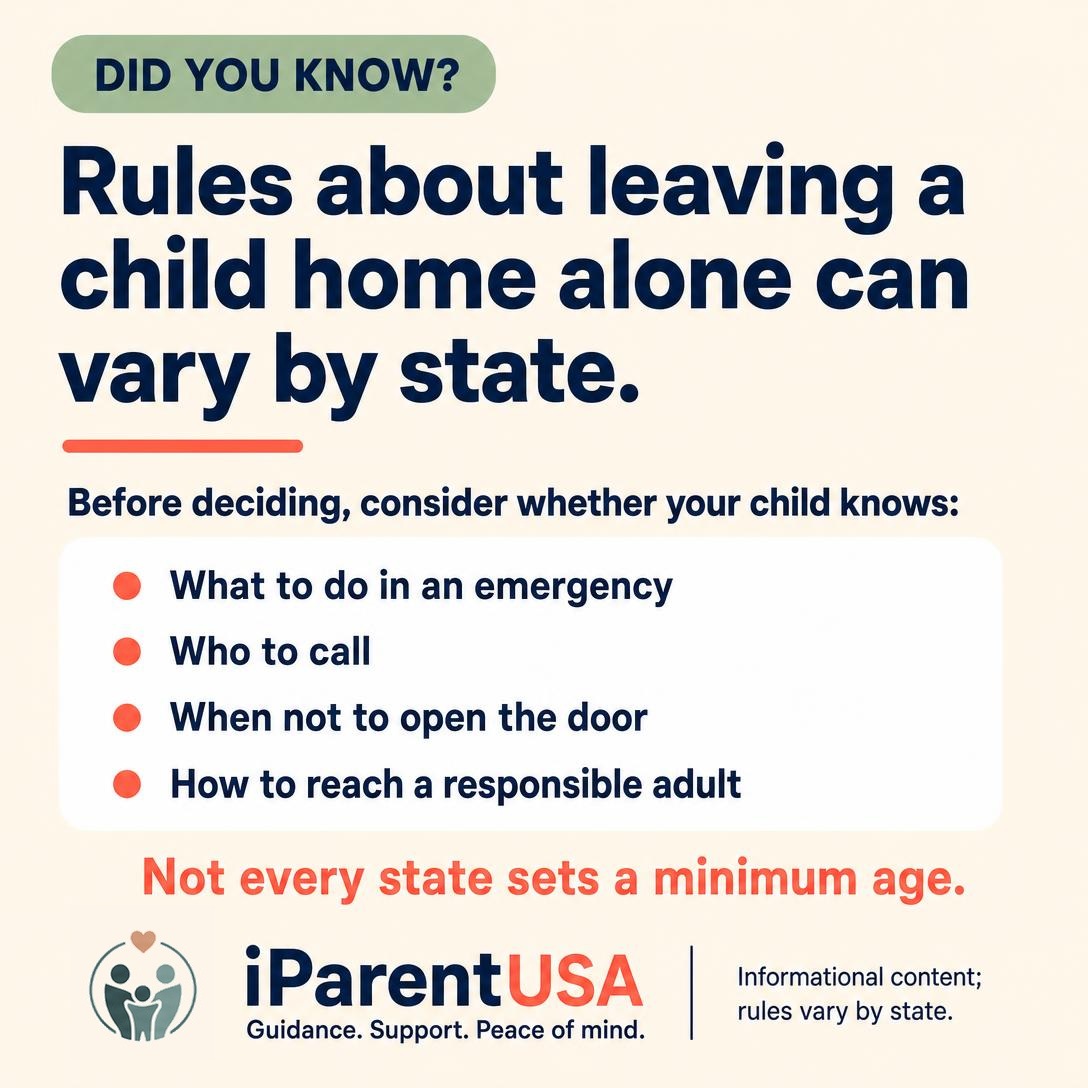
Few topics create as much uncertainty for newly arrived families as figuring out at what age a child can be left home alone. There's no single answer: in the U.S., each state handles this differently, and the final decision also depends on the child's maturity and the specific circumstances.
Why there's no single age
Only a handful of states set a legal minimum age; most leave the decision to parents, guided by recommendations from child welfare agencies rather than a strict rule. This means what's acceptable in one state might be questioned in another, even within the same country.
Where no age is set by law, child protective agencies and courts tend to evaluate case by case, weighing factors like how long the child is left, the time of day, home conditions, and the child's track record handling unexpected situations.
Factors that typically matter more than age
Emotional maturity, ability to follow instructions, knowing what to do in an emergency (like recognizing smoke or knowing to call 911), and the child's own comfort with being alone tend to matter more than age alone. Leaving a child alone for 20 minutes during the day is a very different situation than leaving them for hours at night.
It's also worth considering younger siblings left under an older child's watch: many families prefer to wait until the older child has more experience before adding that extra responsibility.
How to research before deciding
State departments of children and family services often publish informational guidance (not necessarily law) on this topic, and it's worth checking your state's official page. Schools and pediatricians also often have practical advice on readiness for being home alone.
Talk with your child beforehand, put together a simple emergency plan, and start with short daytime periods to see how they respond, adjusting gradually.
Before leaving your child home alone
- Look up your state's official guidance on the topic
- Assess maturity, not just the child's age
- Prepare a simple, visible emergency plan (contacts, 911, a neighbor)
- Start with short daytime periods before extending the time
- Reconsider if younger siblings are involved
Want to talk about your family's situation?
Book a free 15-minute consultation or get the free guide to your first 30 days in the United States.
Full guide on this topic: Everyday life
Read next
- Can school look after your child after class?See how after-school programs at US schools typically work, what they cost, and what to ask before enrolling your child.
- Home pools: safety, prevention and liabilityA pool accident at home can create liability for the owner, even if the child entered without permission. See what's typically considered and how to reduce the risk.
- Do you know how to manage your kids' screen time?Simple phone and router tools can help parents set screen time limits and organize family routine after moving to the United States.
- Does your child need the pediatrician even when not sick?Learn why kids in the US see the pediatrician even when healthy, the typical schedule of well-child visits, and how it connects to school enrollment.