
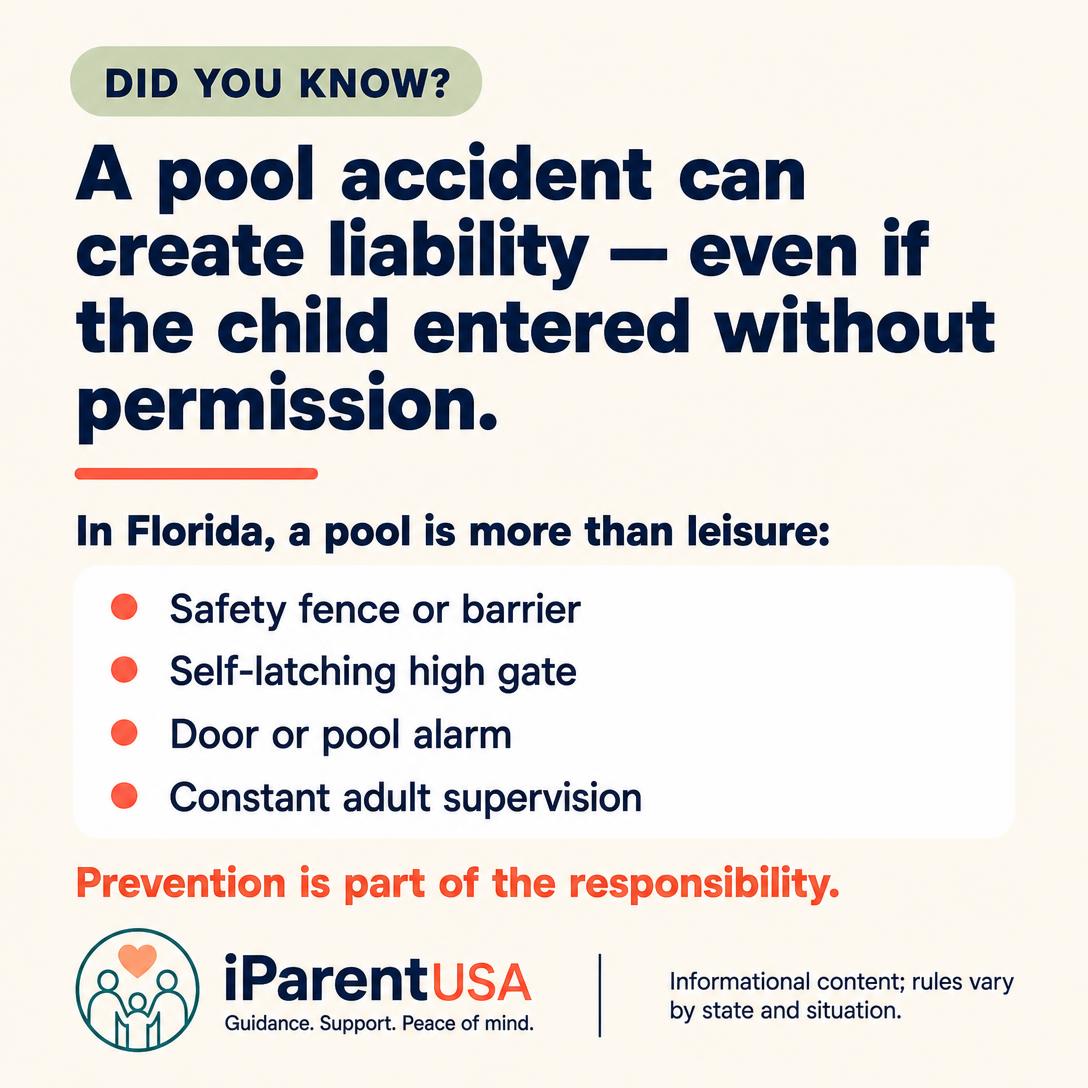
Having a pool at home is common in Florida, but along with the fun comes a responsibility many newly arrived families don't consider right away: in certain circumstances, a homeowner can be held liable for an accident, even when the child involved didn't live there and entered without permission.
Why pools are treated differently
Many states, including Florida, treat residential pools under the "attractive nuisance" concept: the law recognizes that young children can be drawn to a pool without understanding the risk, so owners are generally expected to take reasonable preventive measures, even toward children who weren't invited onto the property.
This doesn't mean every accident automatically makes the homeowner liable — the analysis depends on the circumstances, the safety measures already in place, and state and local law, which often requires fences, self-latching gates, or specific alarms.
Safety measures commonly required or recommended
Florida municipalities often have specific safety codes for residential pools, such as minimum fence height, self-latching gates, and distance between the pool and the house. Checking the local code before installing a pool or buying a home with one avoids surprises and possible fines.
Beyond legal requirements, measures like safety covers, pool alarms, and constant supervision of children reduce the risk of accidents regardless of what your municipality's code requires.
The role of homeowners insurance
Most homeowners insurance policies include some level of liability coverage, which can help in the event of a pool accident, but limits and exclusions vary widely from policy to policy. It's worth reviewing with the insurer whether the pool was properly disclosed and whether the coverage limit matches the risk.
Because final liability depends on the specific circumstances of the accident and state law, it's advisable to consult a local attorney when building, buying, or selling a home with a pool, especially if the safety setup seems outdated compared to current codes.
What to check in your pool safety setup
- Confirm your municipality's pool safety code
- Check fences, self-latching gates, and alarms
- Properly disclose the pool on your homeowners policy
- Review liability coverage limits with your insurer
- Consult a local attorney if unsure about specific requirements
Want to talk about your family's situation?
Book a free 15-minute consultation or get the free guide to your first 30 days in the United States.
Full guide on this topic: Insurance
Read next
- Does U.S. car insurance cover what you think?Learn the real difference between liability, collision and comprehensive car insurance in the U.S. so you're not surprised at claim time. A guide for newcomer families.
- What to consider before leaving your child home aloneRules on leaving children home alone vary by U.S. state. See what's typically considered before making this decision and how to check your state's guidance.
- What Renter's Insurance can cover for tenants in the U.S.The landlord's policy usually doesn't cover your belongings. Learn what Renter's Insurance is, what it can cover, and when a landlord may require it in the lease.
- Does property tax change from city to city?Understand why property tax changes from city to city in the U.S. and what that means for a family's housing budget and where to live.