
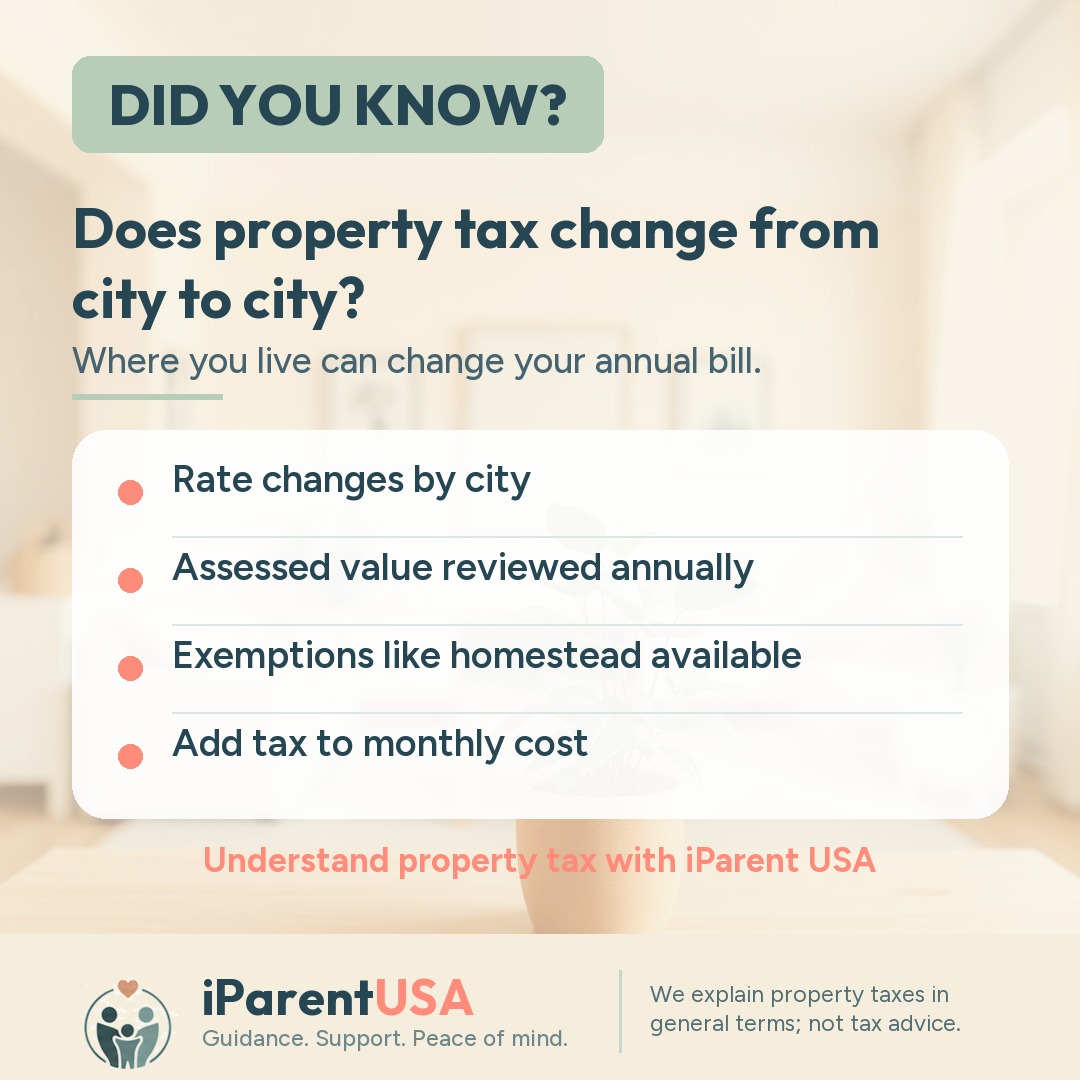
Unlike many countries where property tax follows a national rate, in the U.S. it's set at the local level, meaning two similarly priced homes in neighboring cities can generate very different annual bills. For families choosing where to live, this is a financial factor that deserves as much attention as the price of the home itself.
How property tax is generally calculated
Broadly speaking, the amount charged usually results from combining the home's assessed value with a rate set by the county, city, or local school district. That rate funds public services like schools, fire departments, street maintenance, and libraries, which is why areas with higher-rated public schools often carry higher property taxes.
Rules on how and how often a property is reassessed also vary by state, so the amount owed can shift over the years even without any renovation to the home.
Why this matters when choosing where to live
Two similarly priced homes in different cities can carry annual property tax differences of thousands of dollars, which directly affects the family's monthly budget, especially if the tax is bundled into the mortgage payment through escrow. Always ask for the exact property tax figure for the specific home, not just a regional average, before closing a deal.
Some cities and counties offer exemptions or partial reductions for certain groups, such as seniors, veterans, or owners who use the property as their primary residence, but rules vary widely and should be confirmed locally.
Where to find reliable information
The county assessor's website typically publishes the assessed value and applicable rate for each specific property, allowing you to estimate the annual cost before buying. Licensed real estate agents usually have access to this history as well.
Because tax rules change frequently and vary by jurisdiction, it's always best to confirm current figures directly with the city, county, or a locally experienced accountant, rather than relying only on general estimates.
What to check before buying
- Ask for the exact property tax figure for the specific home, not just the citywide average.
- Check how often the property is reassessed and whether an increase is expected.
- Ask whether the tax will be bundled into the mortgage payment (escrow) or paid separately.
- Research whether any exemptions apply to your situation through the local county.
- Consider consulting a licensed accountant or agent to confirm current figures.
Want to talk about your family's situation?
Book a free 15-minute consultation or get the free guide to your first 30 days in the United States.
Full guide on this topic: Taxes
Read next
- Pay cash or get a mortgage in the U.S.: which wins?Compare the trade-offs of paying cash versus getting a mortgage for a home in the United States, and see what to weigh before deciding.
- Is the price on the tag not the final price?U.S. sales tax isn't included on the price tag and varies by state and city. Learn how this tax works and how to plan your purchases accordingly.
- Can the right house change your child's school?Learn how your home address determines your child's assigned public school in the U.S., and what to verify before renting or buying in a new neighborhood.