
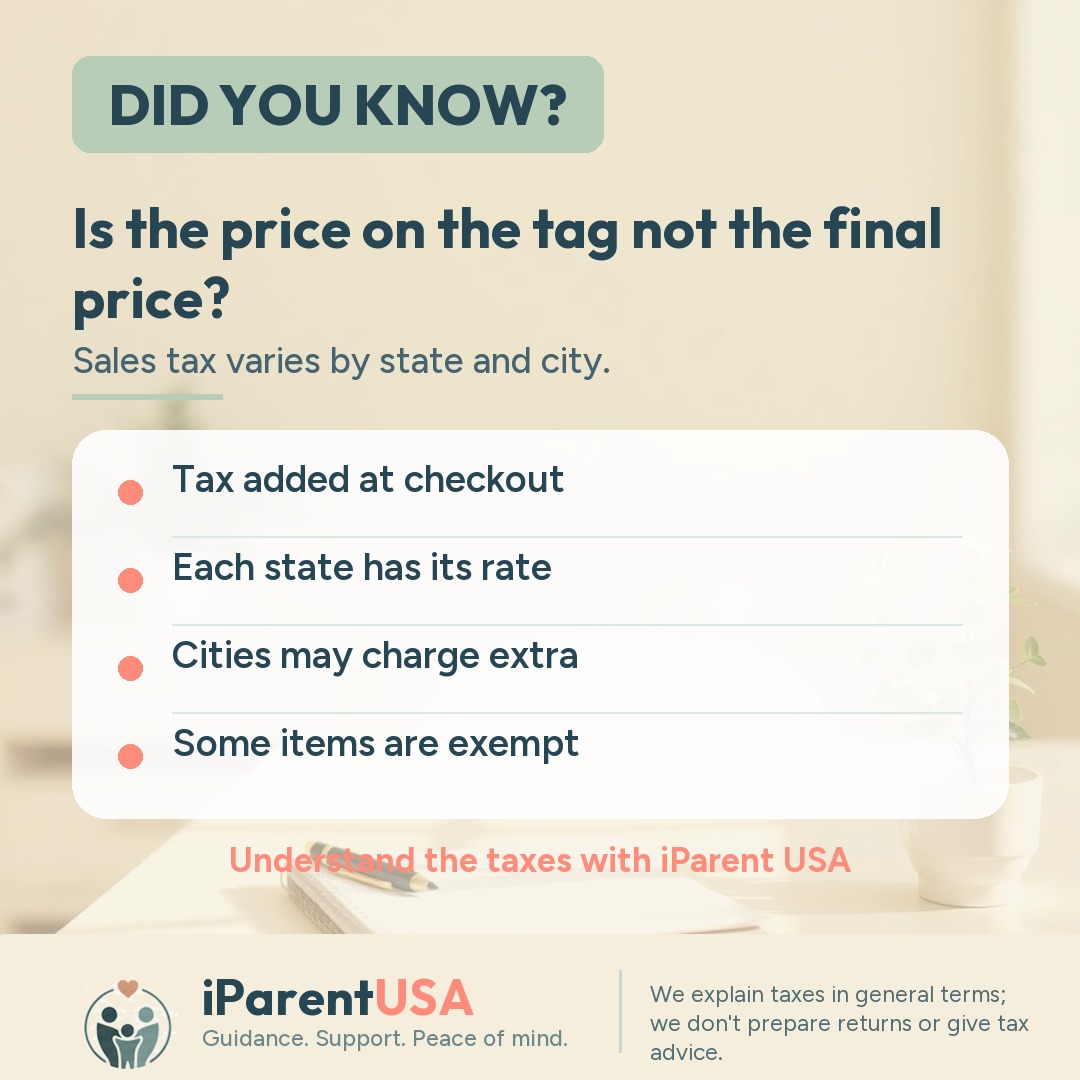
For anyone coming from a country where tax is already built into the displayed price, American sales tax tends to be a surprise: the amount charged at checkout is always higher than the price tag, and the difference depends on where you're shopping.
A tax that changes from place to place
Sales tax is set at the state level, and in many places also at the county or city level, which creates different rates even within the same state. Some states, like Oregon and Delaware, don't charge a general sales tax on most goods.
In addition, certain categories, like basic groceries or medications, may be taxed differently or partially exempt, depending on local law.
Why it doesn't appear on the tag
Unlike in many countries, the common practice in the U.S. is to display prices without tax and calculate sales tax only at checkout. That's part of the local retail culture, but it takes some adjustment for anyone used to seeing the final price upfront.
This same habit shows up on restaurant and service receipts too, so it's worth building in extra room when planning a shopping budget.
Planning purchases with more predictability
One practical way to avoid surprises is to look up your city's approximate tax rate and mentally add it to the price before deciding on a purchase, especially for bigger-ticket items.
Since rates and exemptions change often and vary by jurisdiction, more specific questions should be confirmed with official state sources or a tax professional.
How to plan for sales tax
- Look up the sales tax rate for your city and state
- Mentally add the tax before finalizing bigger purchases
- Check whether the item you want has any exemption
- Remember that restaurants and services also charge this tax
- Confirm specific questions with official state sources
Want to talk about your family's situation?
Book a free 15-minute consultation or get the free guide to your first 30 days in the United States.
Full guide on this topic: Taxes
Read next
- Does your U.S. credit score start from zero?Learn how the U.S. credit score system works and why newcomers start with no history at all. Practical, responsible steps to begin building credit.
- Can your employer double your retirement savings?The 401(k) is one of the main workplace benefits in the U.S. and can include employer matching. Understand how it works before deciding to participate.
- Are FSA and HSA the same thing?FSA and HSA sound alike, but they have different rules for spending, deadlines, and portability. Learn which one may make more sense for your family in the U.S.