
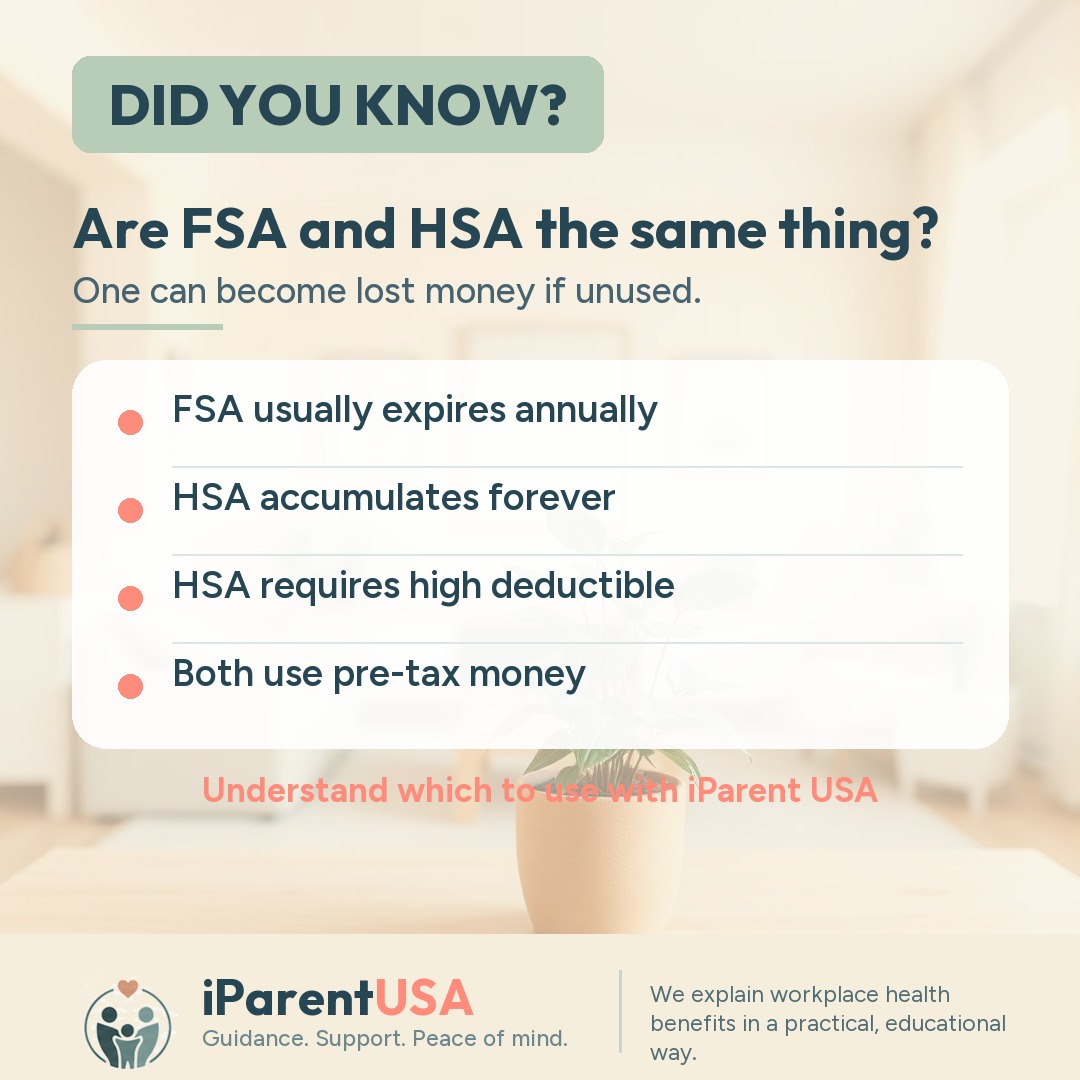
FSA and HSA show up side by side in American benefits paperwork, and it's easy to mix them up, since both help pay medical expenses with money that isn't subject to certain taxes. But the rules for use, deadlines, and portability are quite different.
What sets FSA and HSA apart
An FSA (Flexible Spending Account) is usually tied to your job, and in most cases any unused balance at year's end is forfeited, with only limited grace periods some employers allow.
An HSA (Health Savings Account) is only available if you have a compatible plan, called a high-deductible health plan, but the balance never expires and the account stays yours even if you change jobs.
How to decide which one fits
If your employer only offers a traditional health plan, an FSA is usually the only option available, and it's worth planning the amount carefully by estimating predictable medical expenses for the year.
If you have access to an HSA-eligible plan, the long-term benefit can be greater, since the balance can be invested and used years later, including in retirement for medical expenses.
Care to take when using the benefit
Keep receipts for covered expenses, since the benefits administrator can request proof at any time. Not every medical expense qualifies, so check the list of eligible expenses before using the card.
Contribution rules, annual limits, and eligibility change depending on legislation and your health plan, so it's important to confirm the details with your HR department or a benefits specialist.
What to check before choosing
- Confirm whether your health plan is HSA-eligible
- Check if your FSA has a year-end grace period
- Estimate predictable medical expenses before setting the amount
- Keep receipts for every expense paid with the benefit
- Ask HR about specific limits and rules for your plan
Want to talk about your family's situation?
Book a free 15-minute consultation or get the free guide to your first 30 days in the United States.
Full guide on this topic: Healthcare
Read next
- Can your employer double your retirement savings?The 401(k) is one of the main workplace benefits in the U.S. and can include employer matching. Understand how it works before deciding to participate.
- Is the price on the tag not the final price?U.S. sales tax isn't included on the price tag and varies by state and city. Learn how this tax works and how to plan your purchases accordingly.
- Does U.S. car insurance cover what you think?Learn the real difference between liability, collision and comprehensive car insurance in the U.S. so you're not surprised at claim time. A guide for newcomer families.