
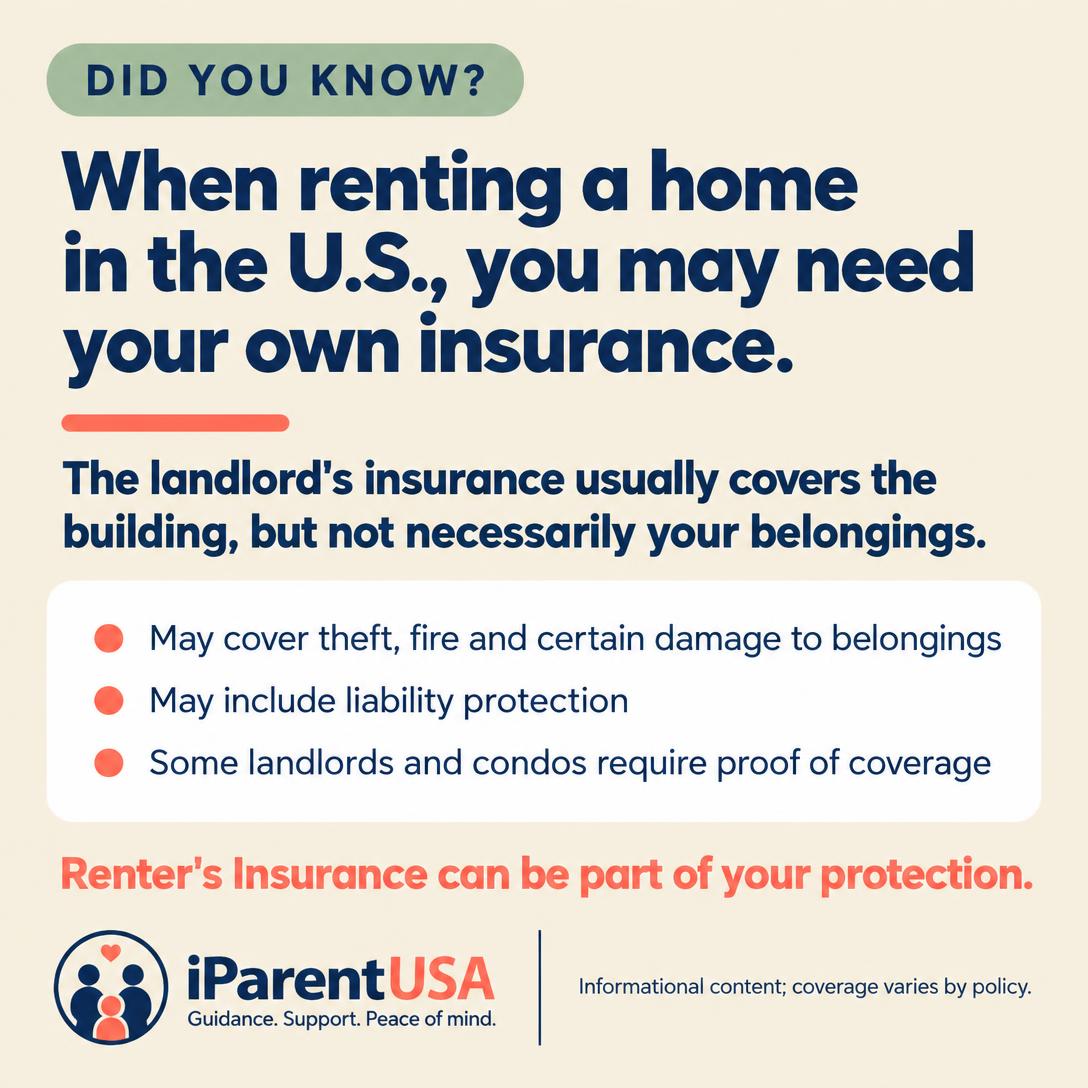
When renting an apartment or house in the U.S., it's easy to assume the building's or landlord's insurance protects everything inside the unit. In practice, that policy usually protects the structure itself — not the furniture, electronics, and belongings of the person living there, which is where Renter's Insurance comes in.
What the landlord's policy typically covers — and doesn't
The property owner's policy (landlord insurance) usually covers structural damage from fire, certain natural disasters, and liability related to the property itself. It typically does not cover theft, fire, or damage to a tenant's personal belongings, such as furniture, clothing, electronics, and jewelry.
That means in the event of a fire, flood, or theft, a tenant without their own coverage could be left with no way to recover the value of their belongings, even if the building itself is insured.
What a Renter's Insurance policy typically includes
Besides covering personal belongings, many Renter's Insurance policies include liability coverage (if someone is injured inside your apartment) and coverage for temporary housing expenses if the unit becomes unlivable due to a covered event. Amounts and exclusions vary widely between insurers and plans.
Basic policies are often relatively inexpensive per month compared with other types of insurance, though the final cost depends on location, the value of belongings declared, and the chosen coverage limit.
When a landlord can require it
Many U.S. leases already include a clause requiring the tenant to purchase and maintain active Renter's Insurance throughout the tenancy, with proof sent to the property manager. It's worth reading the lease carefully before signing to see if this requirement exists and what minimum coverage amount is required.
Even when it's not required, many families choose to get coverage simply for the financial protection it offers against unexpected events, given the cost of replacing belongings from scratch.
What to check about Renter's Insurance
- Confirm whether your lease requires an active policy
- Compare personal property, liability, and temporary housing coverage
- Make a rough inventory of your belongings and their value
- Review deductibles and exclusions before purchasing
- Reassess your coverage amount whenever you acquire higher-value items
Want to talk about your family's situation?
Book a free 15-minute consultation or get the free guide to your first 30 days in the United States.
Full guide on this topic: Insurance
Read next
- Can renting in the U.S. depend on your credit score?Learn how credit scores affect rental approval in the United States and what newly arrived families without a credit history can do about it.
- Does U.S. car insurance cover what you think?Learn the real difference between liability, collision and comprehensive car insurance in the U.S. so you're not surprised at claim time. A guide for newcomer families.
- Home pools: safety, prevention and liabilityA pool accident at home can create liability for the owner, even if the child entered without permission. See what's typically considered and how to reduce the risk.
- Pay cash or get a mortgage in the U.S.: which wins?Compare the trade-offs of paying cash versus getting a mortgage for a home in the United States, and see what to weigh before deciding.