
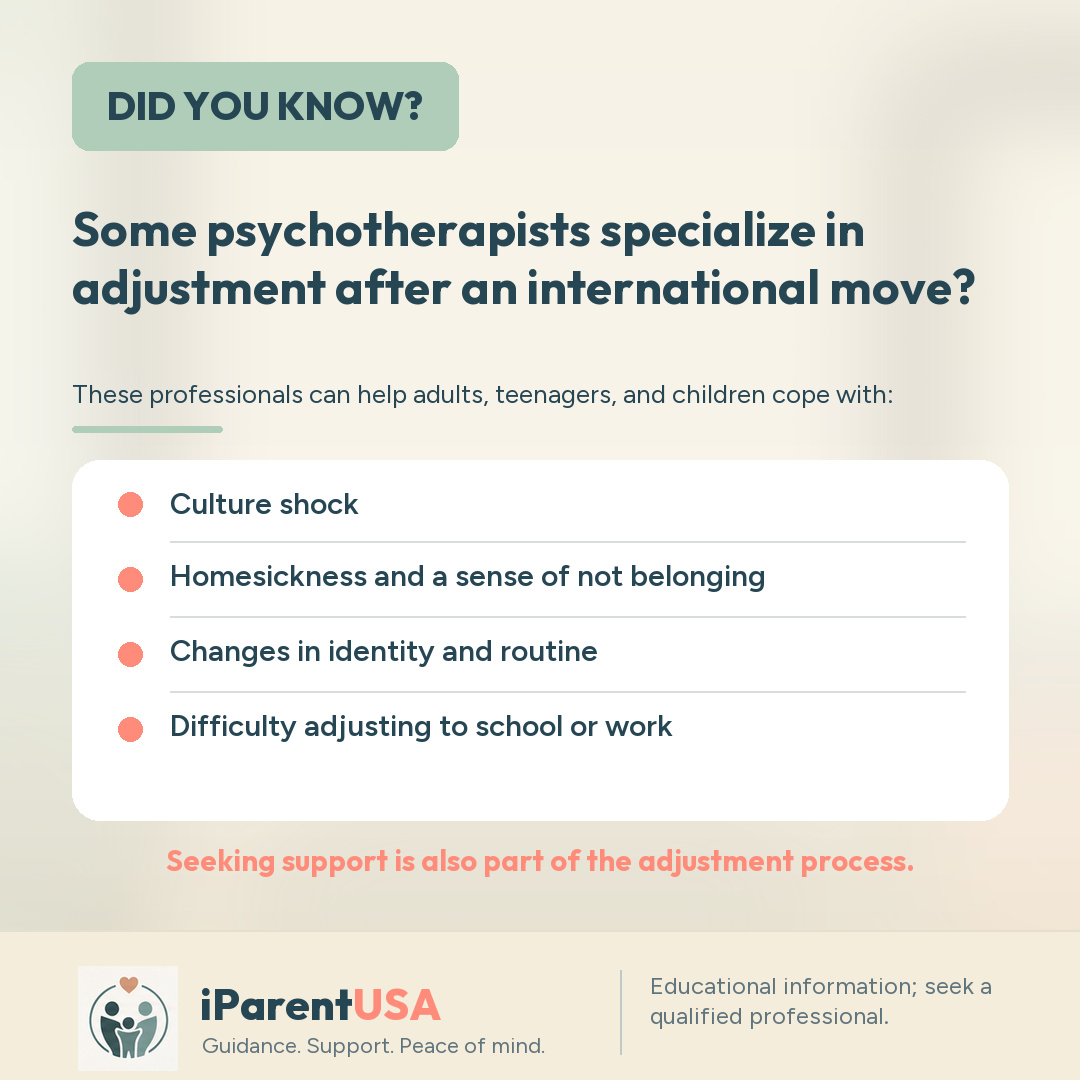
Moving countries involves far more than logistics: it involves grieving routines and relationships left behind, cultural adjustment, and for children and teens, identity shifts during a formative stage of life. There are mental health professionals specifically trained to support this transition, and seeking that support is not a sign of weakness — it's part of the process.
What this kind of support looks like
Therapists experienced in international relocation issues often work with themes such as culture shock, migratory grief (the sense of loss tied to leaving behind people, places, and a familiar life), identity formation in children growing up between two cultures, and family conflicts that arise when members adjust at different paces.
Some of these professionals offer sessions in Portuguese or Spanish, which can make it easier to express complex feelings, especially for those still learning English. Others are bilingual and work with adults as well as children and teens, adjusting their approach by age.
Signs that support might help
Behavior changes, difficulty concentrating at school, social withdrawal, persistent irritability, physical complaints without a clear medical cause, and changes in sleep or appetite can, in some cases, relate to the adjustment process — but they can also have other causes, so it's worth talking with a professional to evaluate each situation.
In adults, similar signs can show up as anxiety related to paperwork and uncertainty about the future, a sense of lost professional purpose, or marital tension when spouses experience the move differently.
How to start looking for support
In the United States, psychologists and therapists must be licensed in the state where they practice, and many offer telehealth sessions, which widens the options even in smaller cities. Health plans vary in mental health coverage, so it's worth checking with the insurer which providers are in-network and how many sessions are covered.
Professional directories, referrals from pediatricians or family doctors, and immigrant community groups are usually good starting points for finding therapists with specific experience in international relocation issues.
How to seek psychological support during the move
- Check that the professional holds an active license in your state of residence.
- Ask about experience with immigration issues, migratory grief, and biculturalism.
- Confirm with your health plan the coverage for therapy sessions and the provider network.
- Consider bilingual therapists, especially for children still learning English.
- Watch for persistent signs within the family and don't hesitate to seek a professional evaluation.
Want to talk about your family's situation?
Book a free 15-minute consultation or get the free guide to your first 30 days in the United States.
Full guide on this topic: Healthcare
Read next
- Do you know how to manage your kids' screen time?Simple phone and router tools can help parents set screen time limits and organize family routine after moving to the United States.
- Does your child need the pediatrician even when not sick?Learn why kids in the US see the pediatrician even when healthy, the typical schedule of well-child visits, and how it connects to school enrollment.
- Not every common Brazilian medication can freely enter the U.S.Before traveling, learn why some medications common in Brazil have a different status in the U.S. and how to check official rules before you fly.