
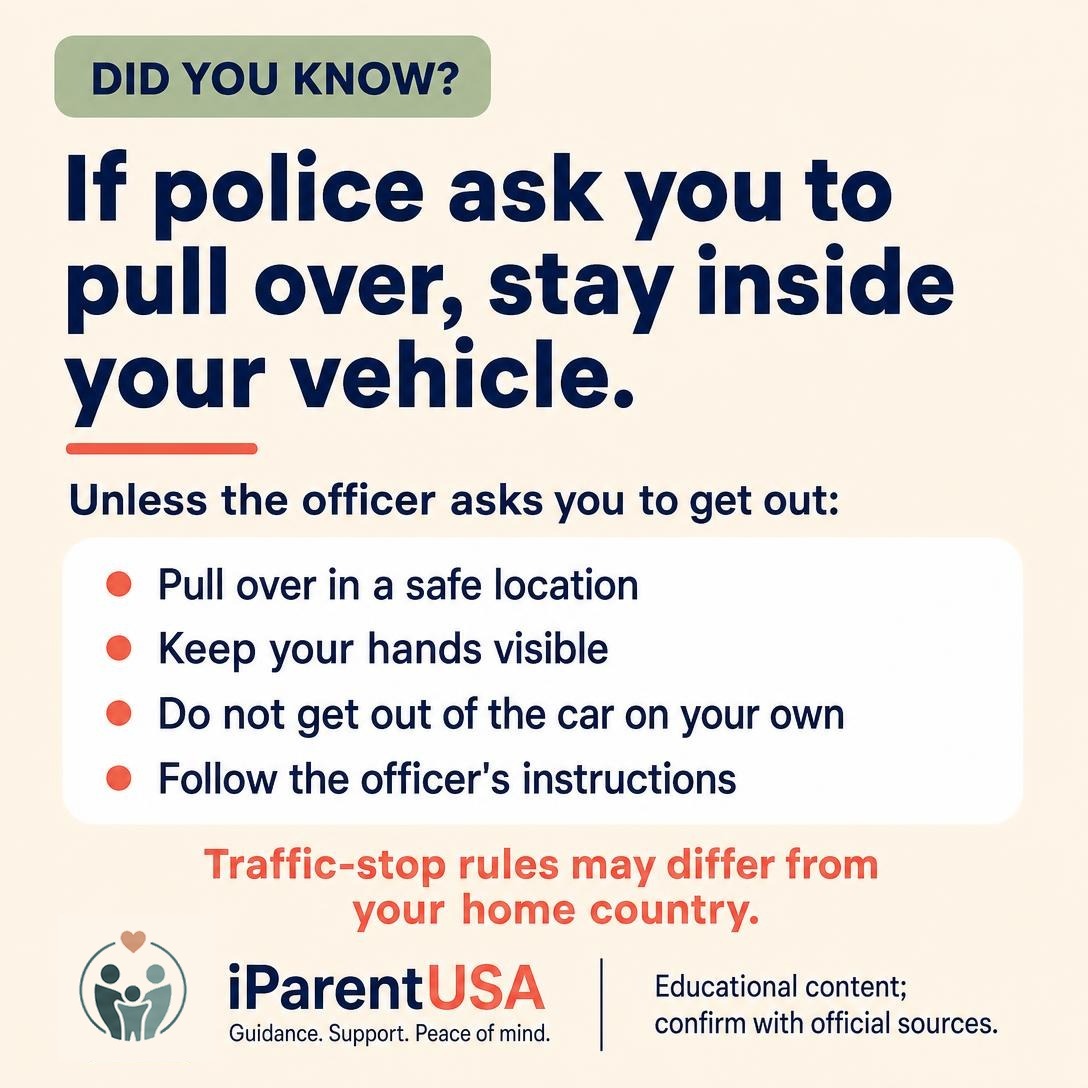
Being pulled over by a traffic officer can feel stressful, especially for anyone still getting used to U.S. norms. Knowing the general behavior expected in these situations can reduce misunderstandings, though the exact rules and how each stop unfolds vary by state and even by local department.
When you're signaled to stop
General guidance is to slow down and pull over in a safe spot as soon as possible, ideally on the shoulder, with hazard lights on. Turn off the engine, keep your hands visible — often on the wheel — and avoid sudden movements, especially when reaching for documents in the glove box or back seat.
Officers commonly ask for a driver's license, vehicle registration, and proof of insurance. Announcing out loud before reaching for these documents helps avoid misunderstandings.
Rights and conduct during the stop
In the U.S., drivers generally have the right to remain silent beyond providing requested documents, and can politely ask why they were stopped. Recording the interaction on a phone is allowed in most states, though specifics vary, and it's best to stay calm and avoid arguing on the spot — questions about the ticket can be raised later, including in traffic court.
If language is a barrier, it's fine to say so and ask the officer to speak more slowly; many departments have access to phone interpreters for more complex situations.
After the stop
The officer may end the stop with just a verbal warning, a citation, or, in more serious cases, other action. A traffic ticket is not, by itself, a criminal charge, but failing to pay or appear in court by the deadline can create additional consequences that vary by state.
If there's doubt about whether the citation is valid or how it might affect insurance or your license, it's worth consulting a local traffic attorney before the response deadline passes.
What to keep in mind during a traffic stop
- Pull over in a safe spot and keep your hands visible
- Keep your license, registration, and insurance organized and accessible
- Announce your movements before reaching for documents
- Avoid arguing about the ticket on the spot; dispute it later if needed
- Consult a local attorney if you're unsure about the consequences
Want to talk about your family's situation?
Book a free 15-minute consultation or get the free guide to your first 30 days in the United States.
Full guide on this topic: Everyday life
Read next
- Does U.S. car insurance cover what you think?Learn the real difference between liability, collision and comprehensive car insurance in the U.S. so you're not surprised at claim time. A guide for newcomer families.
- Do you know what to do first after a car accident?The order of steps after a U.S. car accident can affect your insurance claim. Learn what to do first, what to document, and when to call your insurer.
- Is your foreign driver's license valid in the U.S.?Whether a foreign driver's license is valid in the U.S. depends on the state. Learn when a local license is required and what documents are usually needed.
- Why checking your phone at a red light can result in a ticketIn some states, checking your phone at a red light can result in a ticket. Understand how distracted driving laws work and why they vary from state to state.