
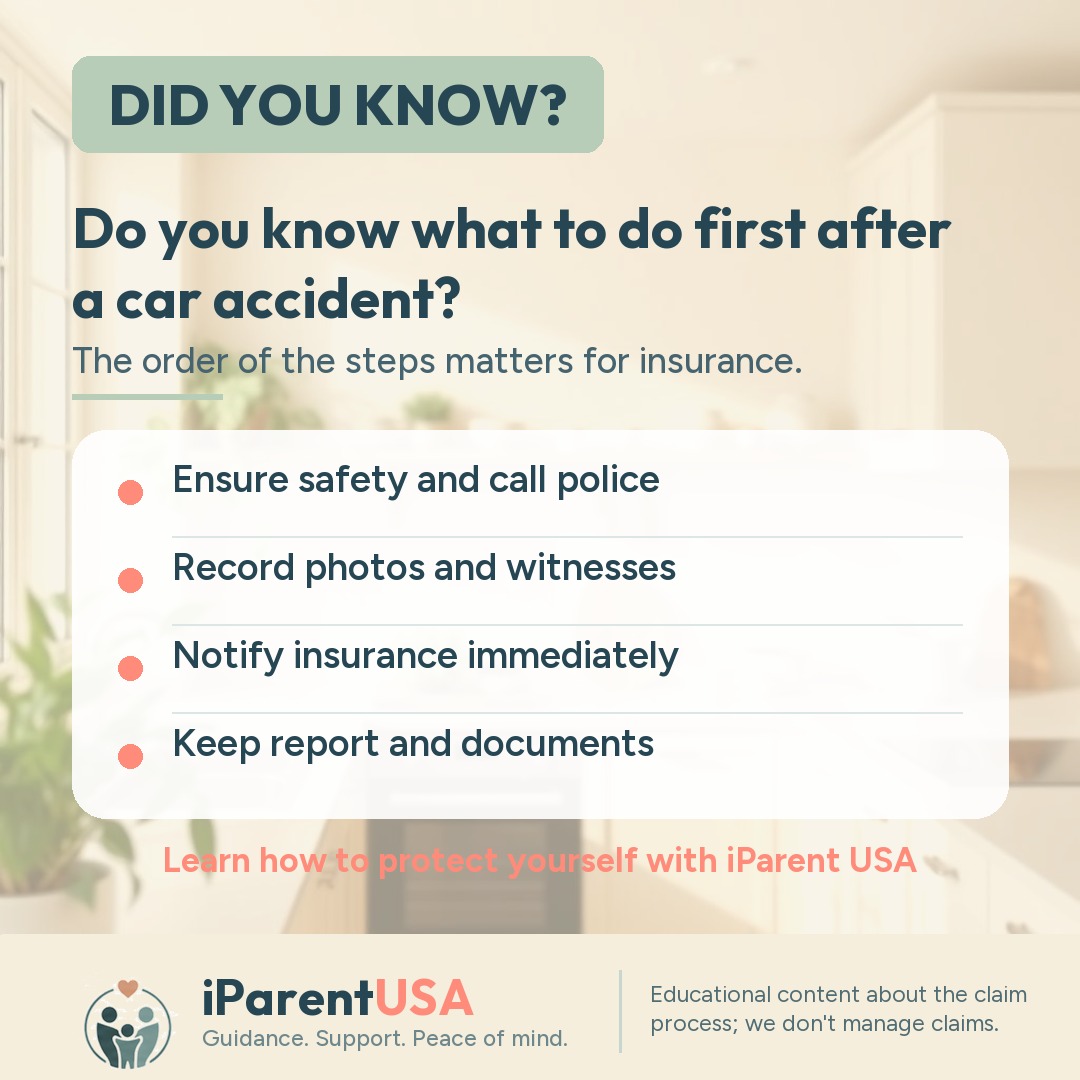
A car accident is stressful anywhere, but in the U.S. the order of the steps you take can directly affect how your insurance claim moves forward. Knowing the basics ahead of time helps you avoid rushed decisions at the wrong moment.
The first few minutes matter
Prioritize safety: move the car to a safe spot if possible, call the local emergency number (911) if anyone is hurt or damage is significant, and never admit fault at the scene, even if you think you were wrong.
Exchange information with the other party, including name, phone number, license plate, insurer, and policy number. Photograph the vehicles, the road, and any relevant signs or markings before anything is moved.
Police report and contacting your insurer
Many states require a police report for accidents involving injuries or damage above a certain amount; check your local requirement. Keep a copy of the report, since your insurer will usually ask for it.
Report the accident to your insurer as soon as possible, even if the other party seems to be at fault. Delaying that report can complicate the claims process.
After the accident
Keep every receipt and communication related to the accident, including repair estimates and any medical visits. Write down witness names, if any.
Every insurer and state has its own claims process, so it's important to follow the specific instructions in your policy and, in more complex cases, seek guidance from a licensed professional.
Checklist for after an accident
- Check everyone's safety and call 911 if needed
- Exchange complete information with the other party involved
- Photograph the scene before moving vehicles, if it's safe
- File a police report when required in your state
- Notify your insurer about the accident as soon as possible
Want to talk about your family's situation?
Book a free 15-minute consultation or get the free guide to your first 30 days in the United States.
Full guide on this topic: Insurance
Read next
- Does U.S. car insurance cover what you think?Learn the real difference between liability, collision and comprehensive car insurance in the U.S. so you're not surprised at claim time. A guide for newcomer families.
- Is your foreign driver's license valid in the U.S.?Whether a foreign driver's license is valid in the U.S. depends on the state. Learn when a local license is required and what documents are usually needed.
- Does your U.S. credit score start from zero?Learn how the U.S. credit score system works and why newcomers start with no history at all. Practical, responsible steps to begin building credit.