
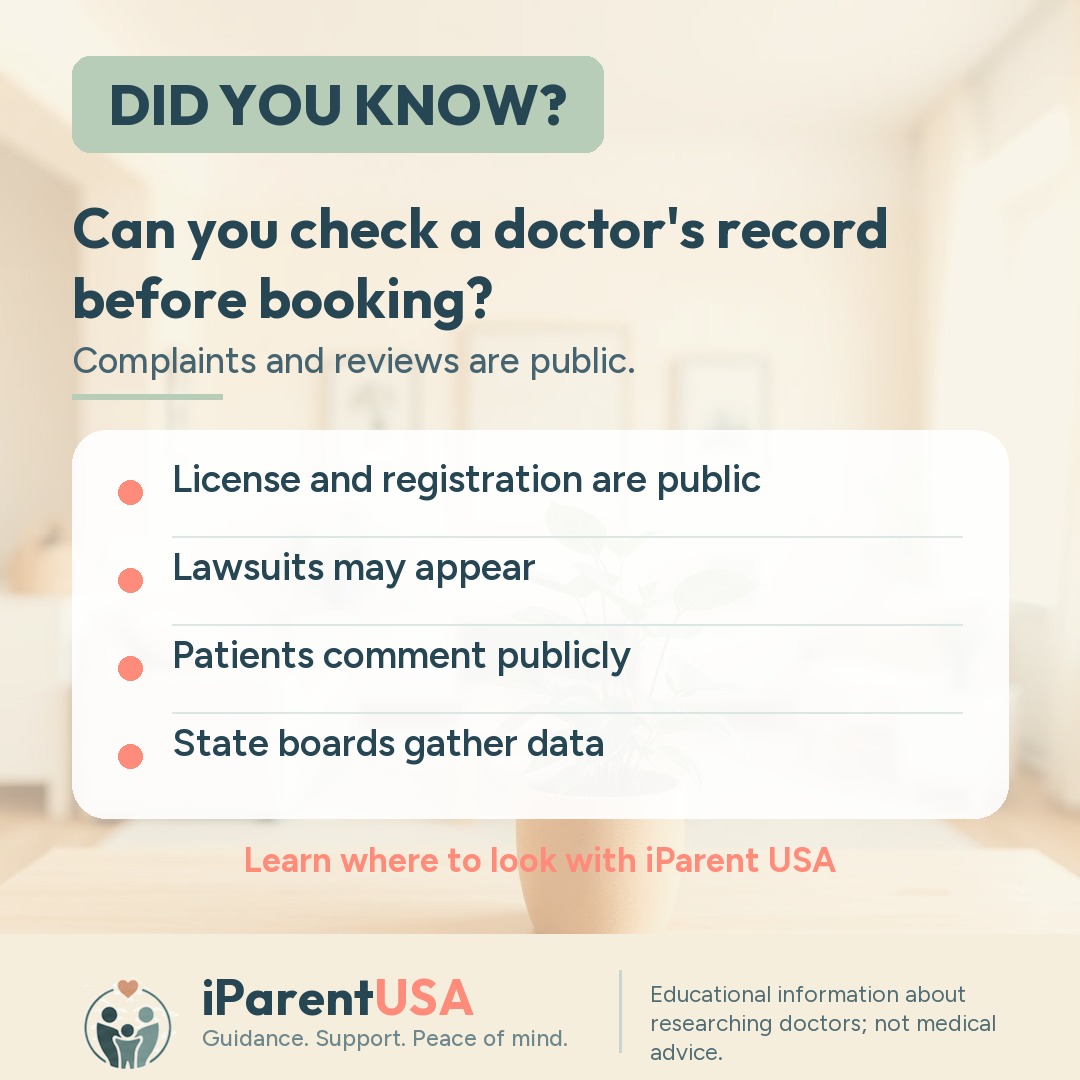
In the U.S., a good amount of information about a doctor's license, training, and disciplinary history is public, and families can look up these records before booking an appointment. For those newly arrived and without recommendations from acquaintances yet, this kind of research can bring more peace of mind when choosing a provider.
Where to check official records
Each state has an agency responsible for licensing physicians (a medical board), and most offer a public search tool where you can verify whether a license is active, review the provider's training, and see any recorded disciplinary actions. This is generally the most reliable resource, since it's an official, non-commercial source.
In addition, some hospitals and health networks publish the training and specialization of affiliated physicians on their own websites, which helps confirm experience in specific areas.
The role of patient reviews
Patient review sites can offer useful insights about communication style, wait times, and overall office experience, but they're inherently subjective and don't replace official license records. It's worth reading several reviews, not just one or two, for a more balanced picture.
It's important to remember that a single negative review doesn't necessarily point to a serious problem, just as a high rating doesn't guarantee a doctor is the best fit for a specific health need.
What this research doesn't replace
Researching a doctor's public record is a reasonable due-diligence step, but it doesn't replace a direct conversation with the provider, confirming that they accept the family's health plan, or getting a second medical opinion when there's a clinical question. This research also doesn't constitute medical advice.
For more specific needs, like finding a specialist for an already-diagnosed condition, many families also ask their primary care physician or their insurer for a recommendation, which can provide a list of in-network providers.
Where and how to research
- Check your state's medical board website to confirm the doctor's license is active.
- Review the training and specialization listed by the affiliated hospital or clinic.
- Read several patient reviews, not just one, for a balanced picture.
- Confirm directly with the office whether the doctor accepts your health plan.
- Ask your primary care physician or insurer for a recommendation when you need a specialist.
Want to talk about your family's situation?
Book a free 15-minute consultation or get the free guide to your first 30 days in the United States.
Full guide on this topic: Healthcare
Read next
- Are urgent care and the ER the same thing?Learn the differences between urgent care and the emergency room in the U.S., when to use each, and how that choice affects your bill.
- Does your child need the pediatrician even when not sick?Learn why kids in the US see the pediatrician even when healthy, the typical schedule of well-child visits, and how it connects to school enrollment.
- Some psychotherapists specialize in adjustment after an international moveLearn how to find therapists in the U.S. who specialize in adjustment after an international move, and what to consider when seeking support for your family.