
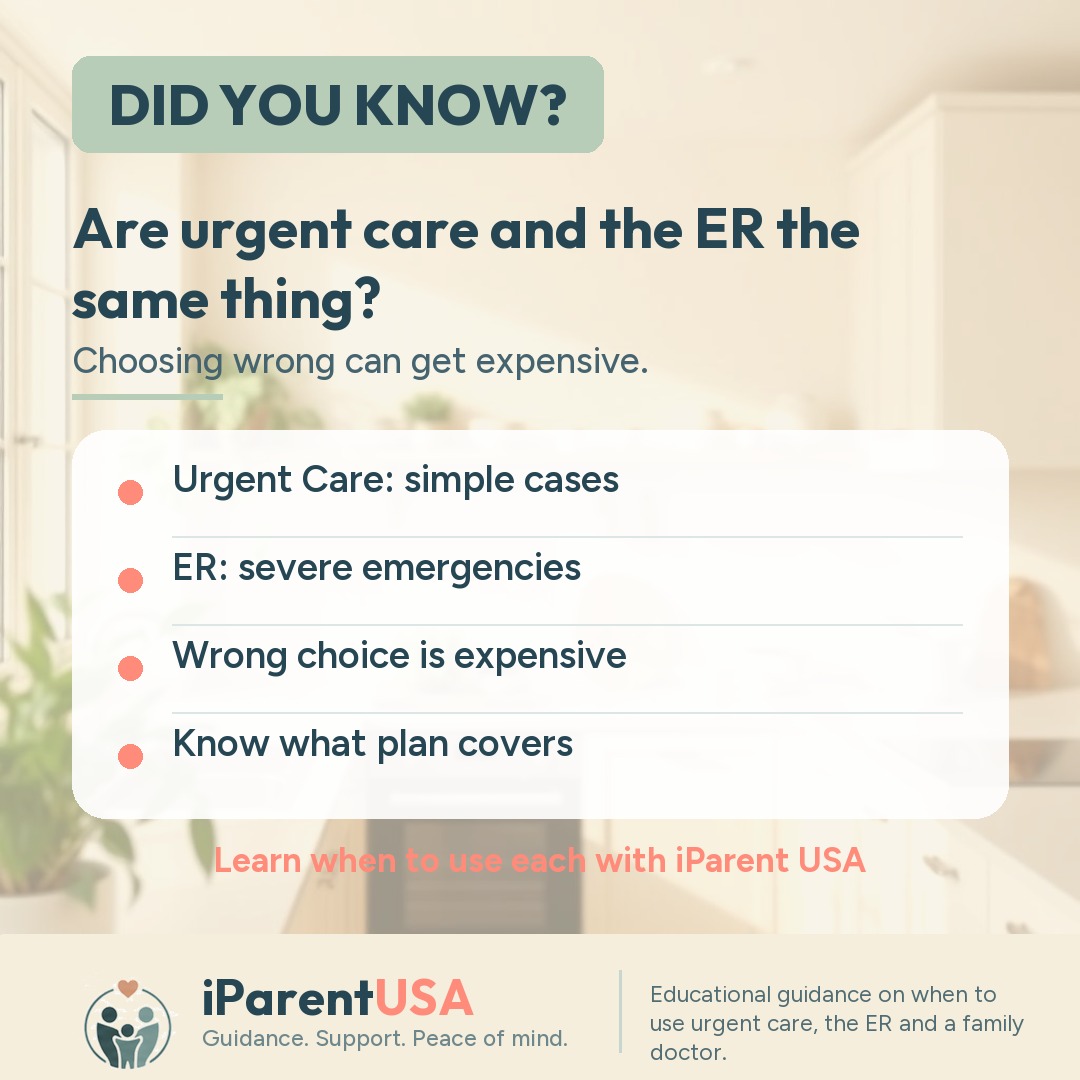
Choosing between urgent care and the emergency room (ER) is a decision many immigrant families face without knowing exactly where to draw the line. Both handle unplanned health issues, but they serve different purposes, with meaningful differences in cost, wait time, and type of care offered.
What each type of care is meant for
Urgent care is meant for conditions that need prompt attention but aren't life-threatening: infections, cuts that need stitches, high fever, sprains, and similar issues. The emergency room (ER), on the other hand, is meant for situations that could threaten life or cause permanent harm, such as severe chest pain, serious difficulty breathing, heavy bleeding, or loss of consciousness.
When in doubt about severity, the general guidance is to prioritize safety and go to the ER or call emergency services (911), rather than trying to 'save money' by choosing urgent care when symptoms seem serious.
Cost and wait time differences
Generally speaking, urgent care visits tend to cost less and involve shorter wait times than an ER visit, but exact amounts depend on the health plan, network, and state. An ER visit without a true emergency can result in a much higher bill, even with insurance.
Whenever possible, check whether the urgent care clinic or hospital is in your plan's network, since out-of-network care tends to cost significantly more.
Other options for non-urgent issues
For non-urgent health matters, like routine follow-up, prescription renewals, or general questions, many families prefer scheduling with a primary care physician, who typically costs less and knows the patient's history. Some plans also offer telehealth for initial screening.
Having an established primary care physician early on helps a family know who to call first when in doubt, reducing the chance of turning to the ER out of uncertainty.
How to decide where to seek care
- For severe or life-threatening symptoms, go to the ER or call 911 without hesitation.
- For urgent but non-severe conditions, consider urgent care.
- Confirm the chosen facility is in your health plan's network before going, when possible.
- For routine visits, schedule with a primary care physician instead of urgent care or the ER.
- Keep your insurer's phone number and your primary care physician's contact on hand for when in doubt.
Want to talk about your family's situation?
Book a free 15-minute consultation or get the free guide to your first 30 days in the United States.
Full guide on this topic: Healthcare
Read next
- Do you know what you pay before insurance starts covering?Understand what deductible and copay mean in U.S. health insurance plans and how these amounts affect what your family pays for each visit.
- Why ambulance transport can generate a separate bill in the U.S.In the U.S., ambulance transport can be billed separately from the ER visit. See how that coverage typically works and what to check in your health plan.
- Does your child need the pediatrician even when not sick?Learn why kids in the US see the pediatrician even when healthy, the typical schedule of well-child visits, and how it connects to school enrollment.