
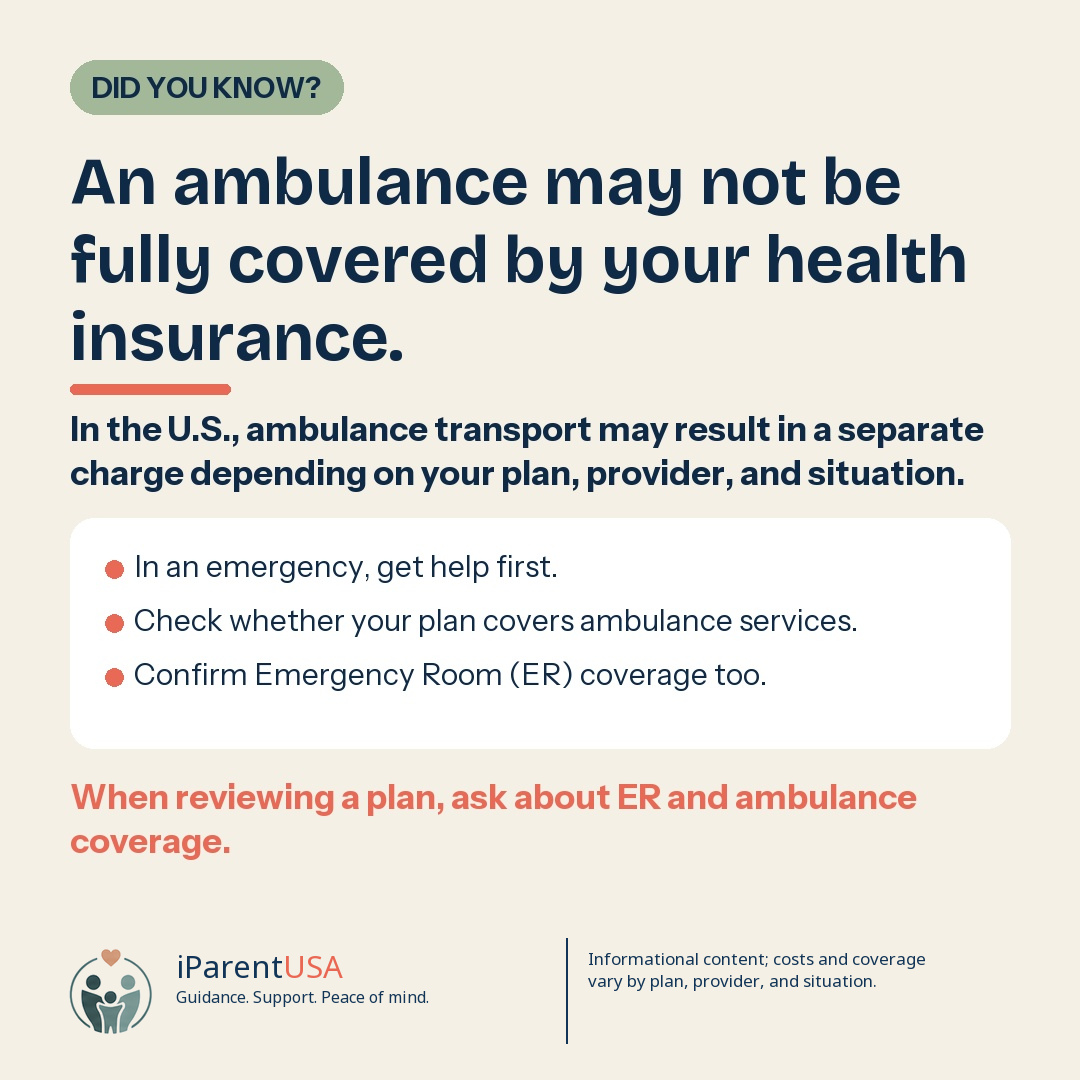
In an emergency, the priority is always to get help — calling 911 and letting professionals assess the situation. But once the urgency passes, many families are surprised to receive an ambulance bill separate from the hospital's, since in the U.S. these two services are often billed by different entities.
Why the ambulance is billed separately
Ambulance transport is often provided by a municipal service, a fire district, or a private operator, distinct from the hospital providing the actual care. That means your health plan's coverage for the ER doesn't automatically guarantee the same coverage for the ambulance ride.
Some ambulance providers may also fall outside your plan's network, which can result in a higher bill, depending on your state's rules and the type of plan you have.
What typically affects the final cost
Cost can vary based on distance traveled, the level of care provided during transport (advanced or basic), whether the service is public or private, and whether there's an agreement between the ambulance provider and your insurer. In some states, surprise billing protection laws limit part of this exposure, but rules vary.
It's worth remembering that refusing an ambulance out of cost concerns is not advisable in a genuine emergency; safety should always come first, and financial questions can be sorted out afterward, including disputing charges with the insurer.
How to prepare in advance
It's worth reviewing your health plan to understand whether it has specific coverage for emergency transport and what copay to expect. Some insurers also offer enrollment in municipal ambulance subscription programs that reduce out-of-pocket costs.
If you receive an unexpected bill, you can contact your insurer and the ambulance provider to negotiate or understand the charge — many bills contain errors or can be paid in installments, and medical billing attorneys or advocates can help in more complex cases.
What to check about ambulance coverage
- Review whether your plan covers emergency transport and the expected copay
- Check whether ambulances in your area are in-network for your plan
- Keep all documentation from the visit in case you need to dispute a charge
- Ask your insurer about surprise billing protections in your state
- In a real emergency, prioritize safety and address the bill afterward
Want to talk about your family's situation?
Book a free 15-minute consultation or get the free guide to your first 30 days in the United States.
Full guide on this topic: Healthcare
Read next
- Are urgent care and the ER the same thing?Learn the differences between urgent care and the emergency room in the U.S., when to use each, and how that choice affects your bill.
- Do you know what you pay before insurance starts covering?Understand what deductible and copay mean in U.S. health insurance plans and how these amounts affect what your family pays for each visit.
- In the U.S., there is no medical school straight after high schoolLearn why there's no medical school right after high school in the U.S., how undergraduate studies work, and how the medical school admissions process unfolds.
- Some U.S. health plans may cover medical expenses in BrazilLearn why some U.S. health plans may cover or reimburse medical expenses incurred in Brazil, and why it's essential to confirm every detail with your insurer.