
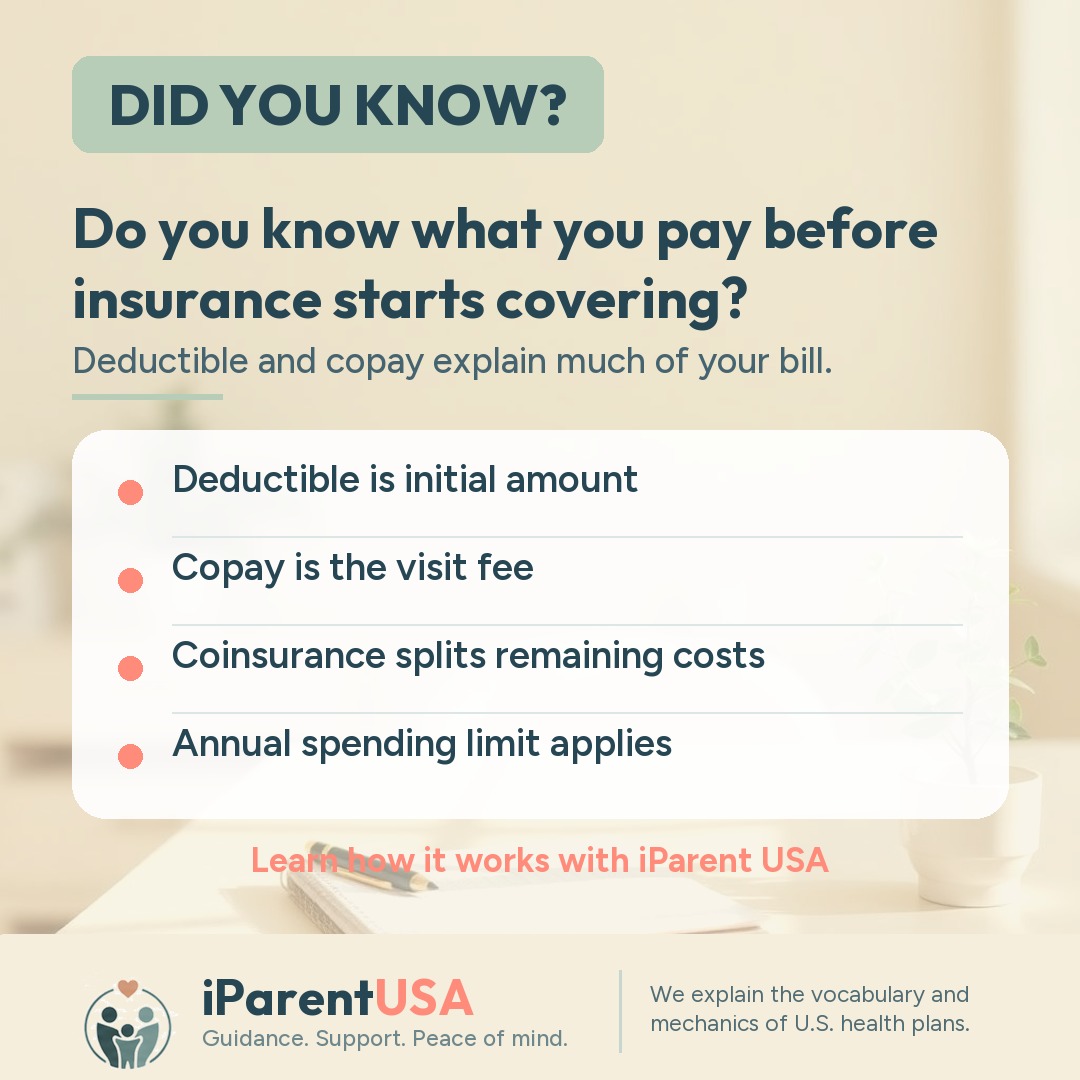
Many immigrant families are surprised to learn that having health insurance in the U.S. doesn't mean everything is covered right away. Terms like deductible and copay define how much a family pays out of pocket before and during the use of a plan, and understanding this logic helps avoid surprises on the bill.
What a deductible is
The deductible is the amount a policyholder must pay out of pocket, within a plan year, before the insurer starts covering most of the cost of certain services. For example, if the annual deductible is $2,000, the policyholder generally covers that amount in visits and procedures until reaching that threshold.
Some services, like annual preventive checkups, are often fully covered even before the deductible is met, but this depends on the specific policy and should be confirmed with the insurance carrier.
What a copay is (and how it differs from coinsurance)
A copay is a fixed amount paid at each visit, such as a doctor's appointment or a prescription pickup, regardless of the total cost of the service. Coinsurance, on the other hand, is a percentage of the total cost that the policyholder shares with the insurer after the deductible has been met. These two concepts often coexist within the same policy, depending on the plan type.
It's common for copay amounts to vary by type of visit: routine appointments typically carry a lower copay than specialist visits or urgent care visits, for instance.
Why reading your specific policy matters
Every health plan has its own structure for deductible, copay, coinsurance, and annual out-of-pocket maximum, and these rules can change from year to year upon policy renewal. There's no single standard that applies to all U.S. plans.
Whenever there's doubt about coverage for a specific procedure, it's worth calling the insurer directly before the visit and asking for written confirmation when possible, rather than assuming what's included.
What to check on your policy
- Check the annual deductible amount and how much of it has already been used this plan year.
- Confirm copay amounts for routine visits, specialists, and urgent care.
- Ask the insurer whether a specific procedure is covered before getting it done.
- Check the annual out-of-pocket maximum on your policy.
- Reread the policy at each renewal, since rules can change year to year.
Want to talk about your family's situation?
Book a free 15-minute consultation or get the free guide to your first 30 days in the United States.
Full guide on this topic: Insurance
Read next
- Are urgent care and the ER the same thing?Learn the differences between urgent care and the emergency room in the U.S., when to use each, and how that choice affects your bill.
- Are FSA and HSA the same thing?FSA and HSA sound alike, but they have different rules for spending, deadlines, and portability. Learn which one may make more sense for your family in the U.S.
- Some U.S. health plans may cover medical expenses in BrazilLearn why some U.S. health plans may cover or reimburse medical expenses incurred in Brazil, and why it's essential to confirm every detail with your insurer.