
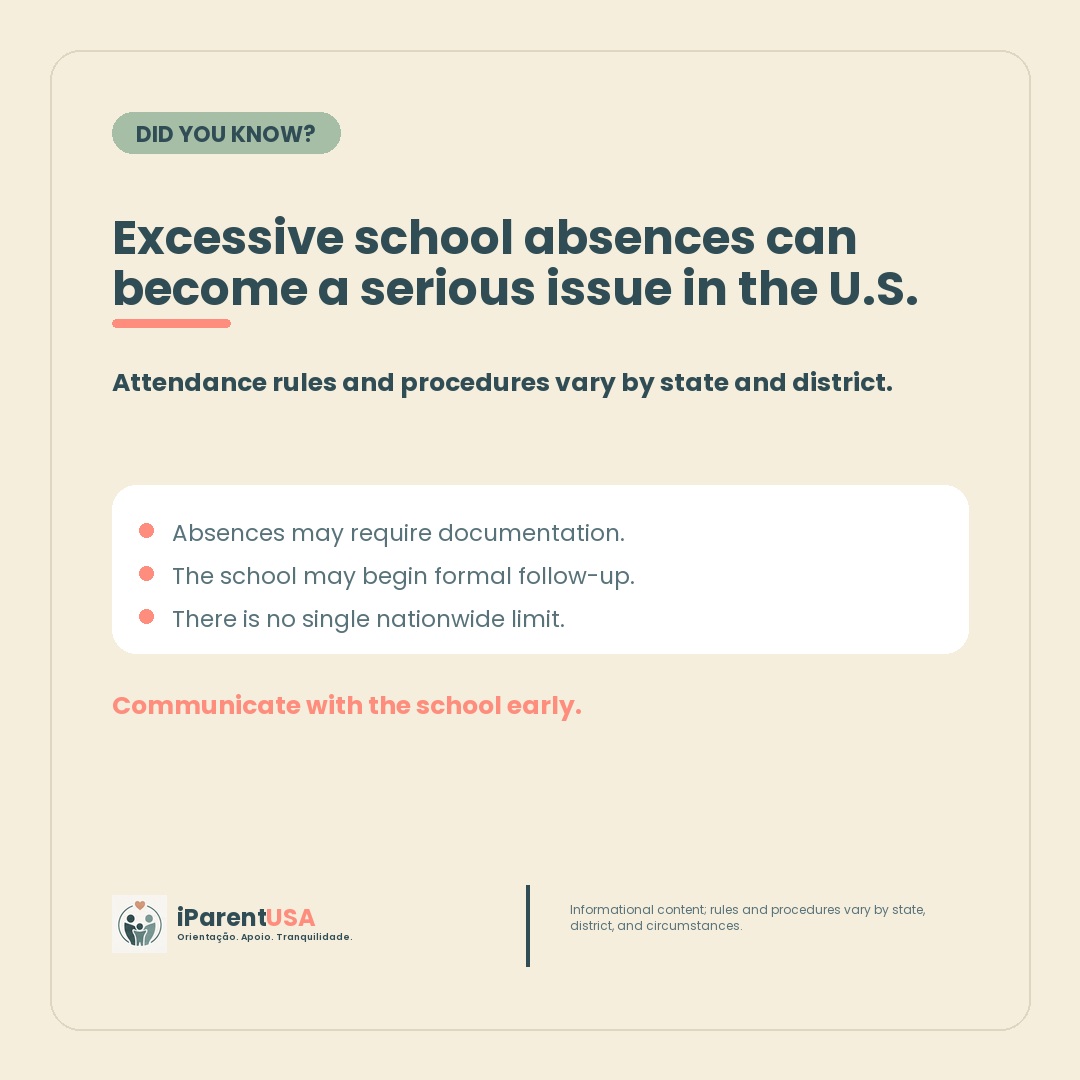
In the United States, school attendance is compulsory within age ranges set by each state. Frequent or unexcused absences may be treated as truancy, but limits and procedures are not the same nationwide.
What may happen when absences continue
The school may contact parents, request explanations or documents, and begin formal attendance procedures. Depending on the state, district, and circumstances, the situation may also involve child-welfare agencies or other authorities.
This does not mean there is one nationwide absence limit or that a social-services visit happens automatically after a certain number. The response depends on local rules, the type of absence, supporting explanations, and the family's circumstances.
Extended absences require planning
If a child needs to miss school because of illness, unavoidable travel, or another reason for an extended period, contact the school as early as possible. Ask how to report the absence and which documents may be required.
Even understandable absences may require specific steps. Keeping messages, medical notes, and confirmations helps maintain clear communication with the school.
Know the local rule
Review the school handbook and district guidance on attendance, excused absences, tardiness, and make-up work. If a recurring challenge develops, contact the school team before absences accumulate.
This rule may be very different from what your family knew before arriving in the United States.
How to handle an absence
- Notify the school as soon as you know your child will be absent
- Confirm how the absence should be reported or excused
- Ask which documents must be provided
- Keep copies of messages, forms, and supporting records
- Request guidance if absences begin to repeat
Want to talk about your family's situation?
Book a free 15-minute consultation or get the free guide to your first 30 days in the United States.
Full guide on this topic: School system
Read next
- Can the right house change your child's school?Learn how your home address determines your child's assigned public school in the U.S., and what to verify before renting or buying in a new neighborhood.
- Is public school in the U.S. really free?U.S. public school has no tuition, but recurring costs still show up during the year. Here's what to expect and how to budget for them.
- Can school look after your child after class?See how after-school programs at US schools typically work, what they cost, and what to ask before enrolling your child.
- Enrolling your child in public school? Pay attention to the address you provideEnrolling a child in U.S. public school? Learn how an address, residency documents, and Homestead Exemption records may be considered.