
Families who keep accounts in two countries often send money regularly between their home country and the United States, whether for tuition, rent or everyday expenses. Few realize that the gap between the advertised rate and the rate actually applied can add up to a real cost over time.
Advertised rate vs. effective rate
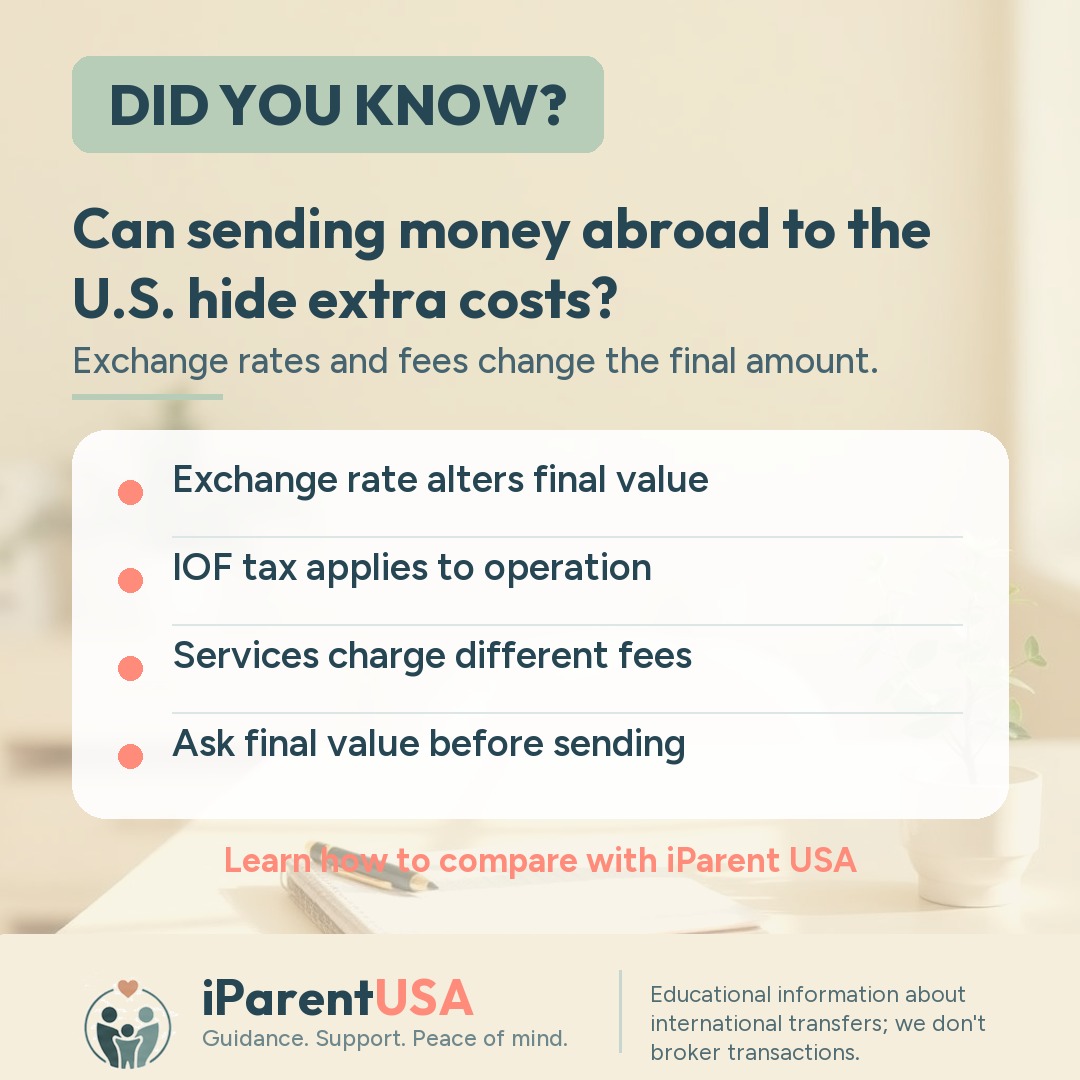
Many platforms display a reference exchange rate but apply their own markup (spread) when the transfer is executed. That spread can vary a lot between banks, currency brokers and fintechs, even on the same day and hour.
On top of the spread, there is often a fixed fee per transfer and, depending on the country and transaction, additional taxes may apply. Once everything is added up, the total cost of a transfer can be noticeably higher than it first appears.
What typically affects the final amount
Traditional banks tend to charge higher fees but come with familiar support structures. Currency fintechs often offer smaller spreads, but it's worth checking whether they're properly regulated and how support works if something goes wrong with a transfer.
It's worth comparing at least two or three options before sending a larger amount, always simulating the actual net amount that arrives, not just the day's headline exchange rate.
Planning for recurring transfers
For families sending money every month, small percentage differences add up over a year. This content is educational; for specific decisions about currency exchange, taxes and remittances, it's advisable to consult an accountant or a specialized professional, since tax rules and limits can change.
What to compare before transferring
- Compare the effective rate (not just the advertised one) across at least two platforms.
- Check for fixed fees and any taxes that may apply to the transaction.
- Confirm whether the institution is properly regulated in the relevant countries.
- Simulate the actual net amount that will land in the destination account.
- For recurring transfers, re-evaluate the best option periodically.
Want to talk about your family's situation?
Book a free 15-minute consultation or get the free guide to your first 30 days in the United States.
Full guide on this topic: Taxes
Read next
- Should college prep start in 8th grade?See why beginning college planning as early as 8th grade can widen your child's options later, and how to build that timeline gradually.
- Is the price on the tag not the final price?U.S. sales tax isn't included on the price tag and varies by state and city. Learn how this tax works and how to plan your purchases accordingly.
- Does your U.S. credit score start from zero?Learn how the U.S. credit score system works and why newcomers start with no history at all. Practical, responsible steps to begin building credit.