
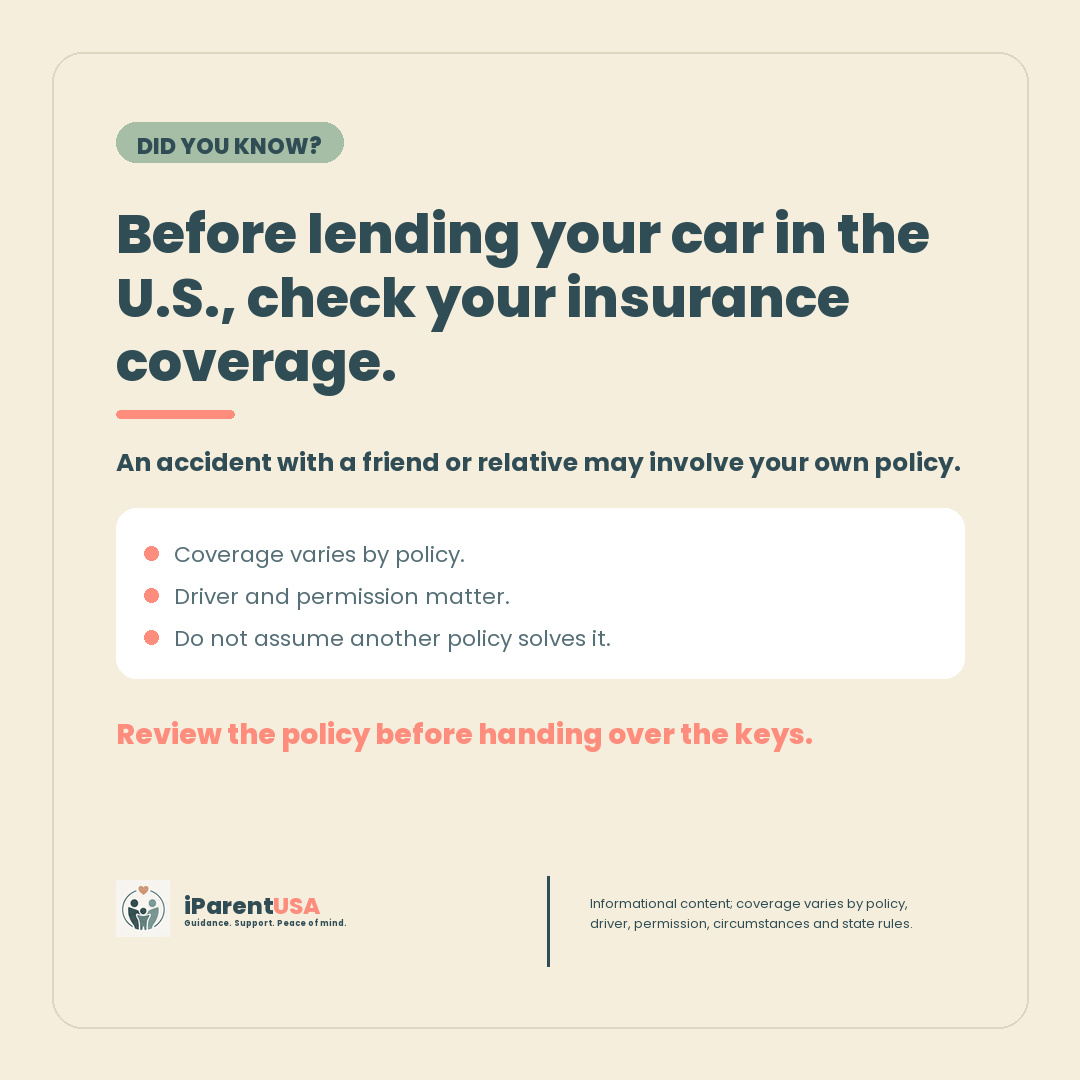
Lending your car to a friend or relative may feel simple, but in the United States auto insurance can involve both the insured vehicle and the person driving it. Before handing over the keys, it is worth understanding what your own policy says about permitted drivers and covered situations.
Why your policy may matter
In many scenarios, auto coverage is connected to the vehicle, not only to the person who bought the policy. If someone with permission drives your car and has an accident, your coverage may be reviewed first or together with other available coverage.
This surprises many families, especially when they assume that the guest driver's own insurance solves everything. In practice, the answer depends on the policy, permission, use of the car, the driver, the accident, and state rules.
What to check before lending the car
Check whether the policy covers occasional drivers, relatives living in the same household, excluded drivers, or drivers with a license from another state or country. Some insurers expect certain household members to be listed even if they drive rarely.
It also helps to understand limits, deductibles, collision coverage, liability coverage, and what happens if the car is used for work, delivery, rideshare, or another purpose outside the policy's expected personal use.
A practical way to handle it
Before lending the car, review the coverage and exclusions page, call the insurer, or speak with the agent. Explain the specific situation: who will drive, for how long, what license they have, and how the car will be used.
This is general education, not individualized insurance or legal advice. The final answer should come from your policy language and the rules that apply in your state.
Useful questions before handing over the keys
- Does my policy cover occasional drivers with permission?
- Is any driver excluded or required to be listed?
- Which limits and deductibles may apply if there is an accident?
- Is the intended use personal, or could it affect coverage?
- Did the insurer confirm the rule in writing or in the policy portal?
Want to talk about your family's situation?
Book a free 15-minute consultation or get the free guide to your first 30 days in the United States.
Full guide on this topic: Insurance
Read next
- Your driving history from abroad may count when buying car insurance in the U.S.New to the U.S. and facing high car insurance quotes? Learn why driving history matters so much and which documents from abroad some insurers may agree to review.
- Is your foreign driver's license valid in the U.S.?Whether a foreign driver's license is valid in the U.S. depends on the state. Learn when a local license is required and what documents are usually needed.
- What Renter's Insurance can cover for tenants in the U.S.The landlord's policy usually doesn't cover your belongings. Learn what Renter's Insurance is, what it can cover, and when a landlord may require it in the lease.
- Does your U.S. credit score start from zero?Learn how the U.S. credit score system works and why newcomers start with no history at all. Practical, responsible steps to begin building credit.