
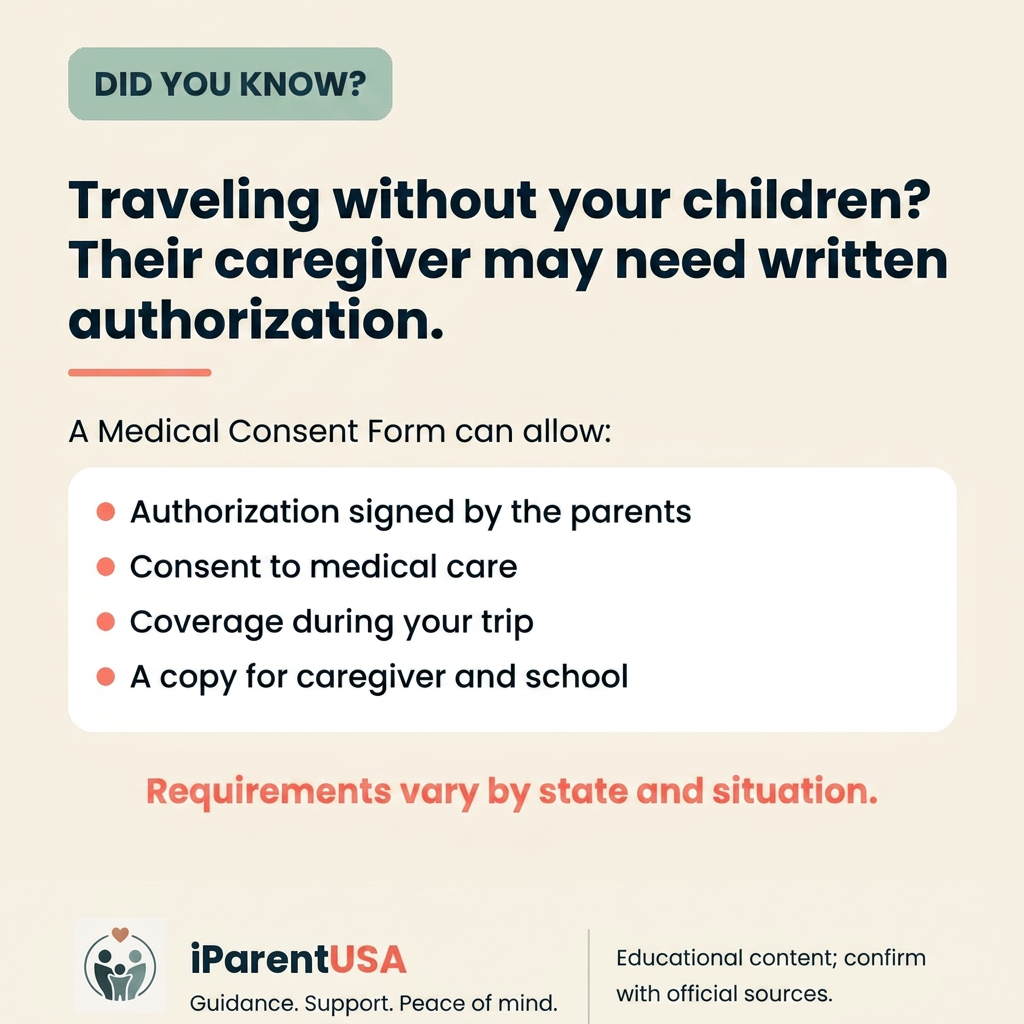
A business trip, a family emergency, or simply a weekend away can leave your child in the care of a relative, friend, or babysitter. If something happens during that time, many hospitals and clinics ask for proof that the caregiver is authorized to make certain medical decisions on your behalf.
What a Medical Consent Form is
It's typically a one-page document in which the legal guardian authorizes a specific person to seek medical care for the child during a set period. It usually includes the child's information, the guardian's and caregiver's details, insurance information, and often a notarization block.
This document does not transfer custody or replace parental authority; it simply helps an emergency room, clinic, or school accept the caregiver's word in a specific situation, such as an urgent visit or giving a medication.
When it's typically requested
Hospitals, urgent care clinics, and even summer camps may ask for this document before treating a child without a parent present. The requirement isn't uniform: some places accept the caregiver's word in genuine emergencies, while others require a signed and sometimes notarized form.
It's worth having this ready whenever a trip or absence lasts more than a few days, or when the child has an ongoing health condition that needs attention, such as allergies, asthma, or a controlled medication.
How to prepare yours
Many states have free templates available online, and some notary services (including shipping stores like UPS Store) can notarize the document. Because requirements vary by state, hospital, and insurer, it's worth confirming with your child's pediatrician or a family attorney whether the form you plan to use is sufficient.
In a genuine life-threatening emergency, U.S. providers generally treat the child first and sort out paperwork afterward — but having the form ready avoids delays and unnecessary questions during an already stressful moment.
What to prepare before traveling without your kids
- Draft or download a Medical Consent Form template specific to your state
- Include insurance details, allergies, and current medications
- Have the document notarized if the receiving institution requires it
- Leave a physical copy with the caregiver and a digital one accessible remotely
- Confirm validity and requirements with the pediatrician or a family attorney
Want to talk about your family's situation?
Book a free 15-minute consultation or get the free guide to your first 30 days in the United States.
Full guide on this topic: Healthcare
Read next
- Not every common Brazilian medication can freely enter the U.S.Before traveling, learn why some medications common in Brazil have a different status in the U.S. and how to check official rules before you fly.
- A school may not give even a common medication without prior authorizationLearn why U.S. schools require prior authorization to give even common medications, how rules vary by state, and what to prepare in advance.
- Can you check a doctor's record before booking?Find out where to check complaints, reviews, and licenses for doctors in the U.S. before booking an appointment, and what this research can't replace.
- Does your child need the pediatrician even when not sick?Learn why kids in the US see the pediatrician even when healthy, the typical schedule of well-child visits, and how it connects to school enrollment.