
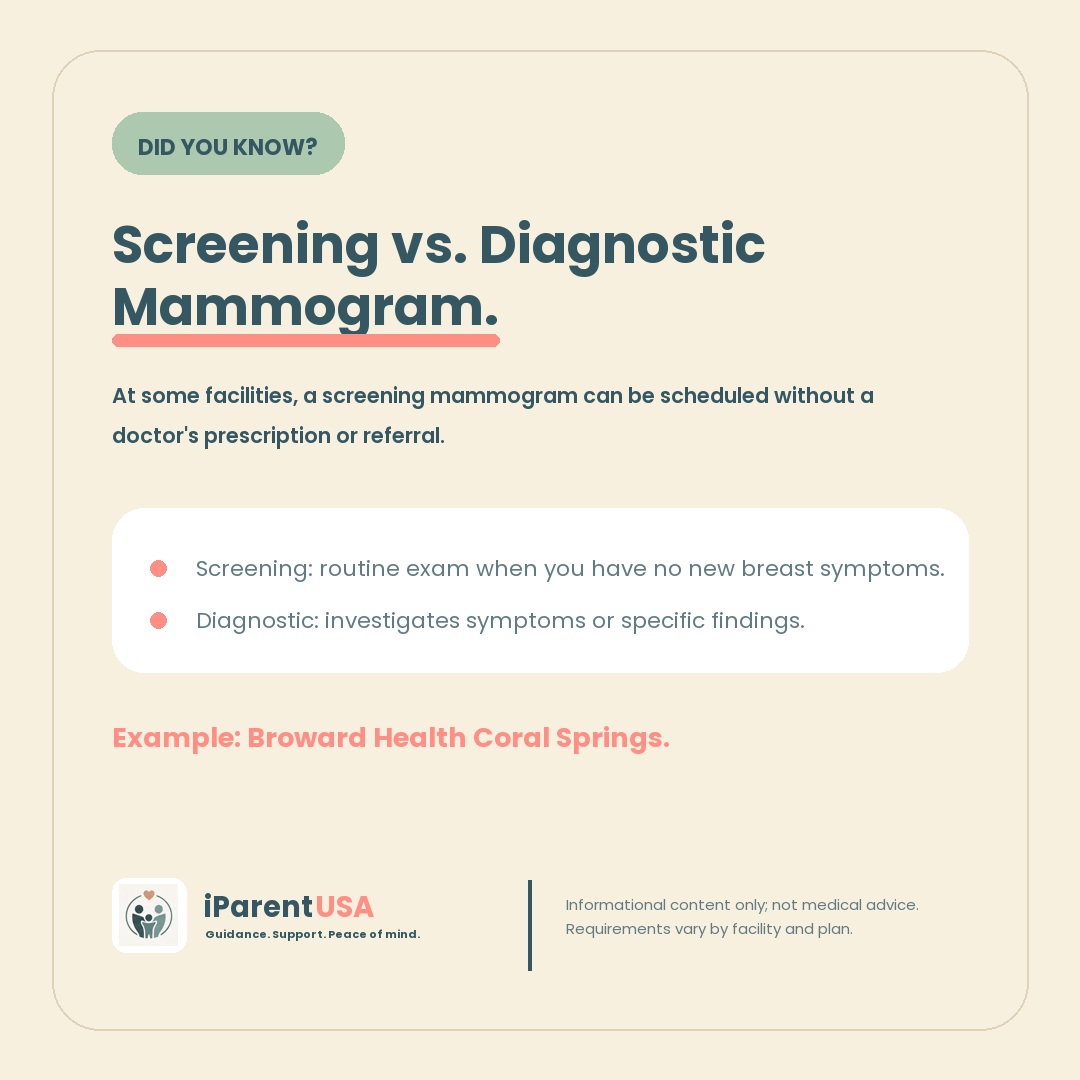
In the United States, not every mammogram is the same type of exam. There is the screening mammogram, done routinely when there are no new symptoms, and the diagnostic mammogram, used to investigate symptoms or specific findings. Understanding the difference helps you schedule the right exam and avoid surprises.
What a screening mammogram is
A screening mammogram is the routine exam recommended for certain age groups, even when the person has no new symptoms. Its goal is to detect changes early, before they cause noticeable signs.
At some imaging centers, a screening mammogram can be scheduled without a doctor's prescription or referral — Broward Health Coral Springs is one example. Still, requirements vary by center and by health plan, so it is worth confirming before booking.
What a diagnostic mammogram is
A diagnostic mammogram is recommended when there is a symptom — such as a lump, pain, or a skin change — or when a previous exam identified a finding that needs closer investigation.
This type of exam usually involves additional images and a more detailed review, and it typically requires a doctor's order or referral.
Why the difference matters
Scheduling the correct type of exam avoids rescheduling and delays in investigating symptoms. In addition, insurance coverage and referral requirements may differ for each type.
This content is informational only and does not replace medical advice. If you have symptoms or questions, consult a healthcare professional.
Before scheduling, check
- Whether the exam is screening (routine) or diagnostic (investigation)
- Whether the center accepts self-scheduling for screening exams
- Which documents and insurance information are required
- Your plan's coverage for each type of exam
- Your doctor's recommendation on timing and frequency
Want to talk about your family's situation?
Book a free 15-minute consultation or get the free guide to your first 30 days in the United States.
Full guide on this topic: Healthcare
Read next
- Turning 18 changes parents' access to medical information in the U.S.When a child turns 18 in the U.S., parents do not automatically keep access to medical information. Learn why authorizations may matter.
- Does your U.S. credit score start from zero?Learn how the U.S. credit score system works and why newcomers start with no history at all. Practical, responsible steps to begin building credit.
- Can sending money abroad to the U.S. hide extra costs?See how exchange rate spreads, fixed fees and taxes can quietly reduce the amount that actually arrives when sending money internationally to the US.
- What is a TRUST and what is it for?A clear, educational look at what a trust is in the United States, why immigrant families consider this estate planning tool, and why it calls for licensed legal guidance.