
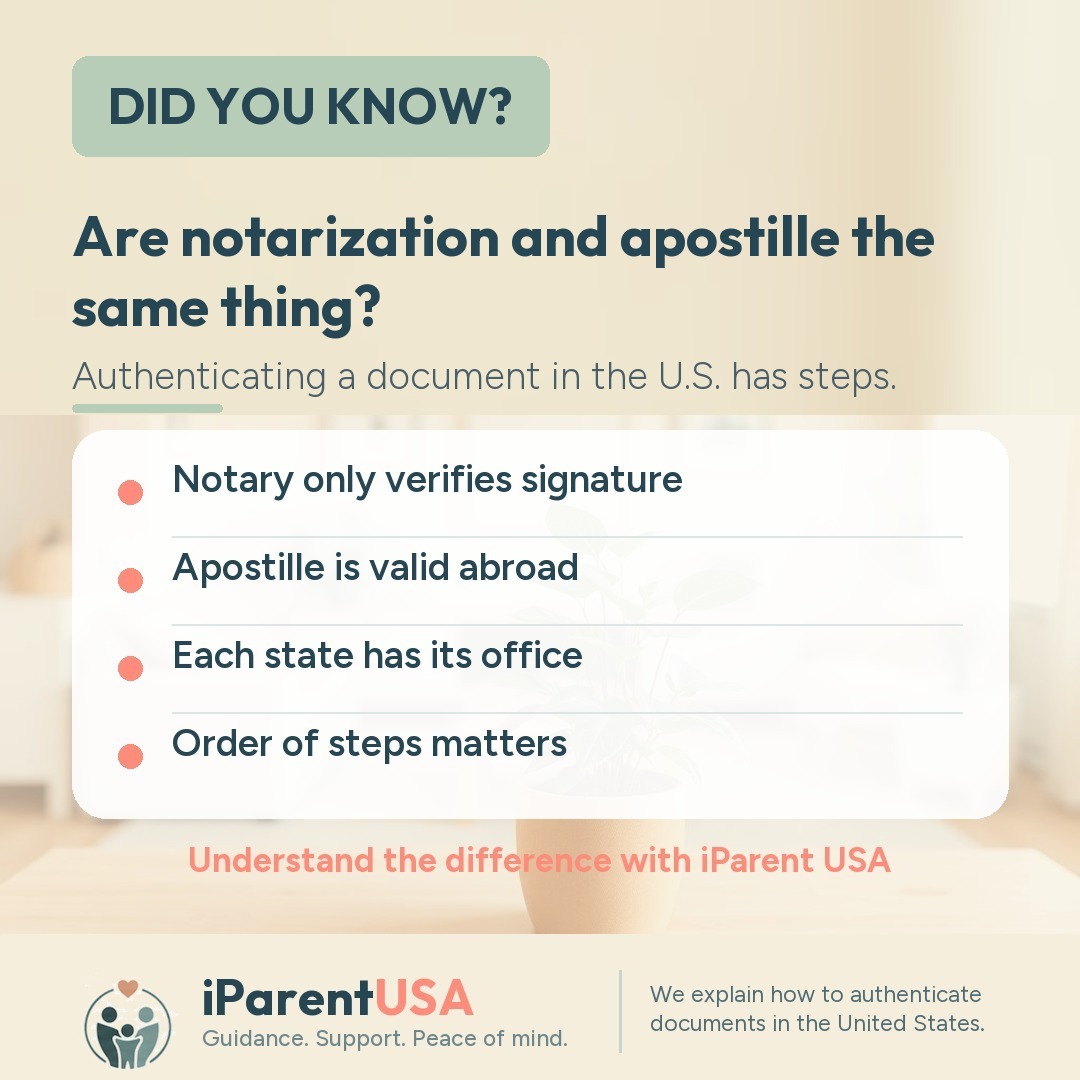
When a document needs to be legally valid in another country, notarization and apostille are often used as if they were interchangeable. They are actually separate steps with different purposes, and understanding the difference can save families several trips back and forth.
What notarization actually does
Notarization is the act by which a U.S. Notary Public confirms the identity of the person signing a document and witnesses the signature. The notary does not verify the content of the document or confirm that the information is accurate; they simply certify that the signer is who they claim to be and signed willingly.
In the U.S., notaries are available at banks, shipping stores, county clerk offices, and law firms. The process is usually quick but requires valid photo identification and, in some cases, witnesses.
What an apostille adds
An apostille is an additional certification, issued by a state authority (usually the Secretary of State) or a federal agency, confirming the authenticity of the notary's or issuing office's signature and seal. It exists so the document can be recognized in another country that is party to the Hague Apostille Convention, such as Brazil.
In practice, a document may first need to be notarized and only afterward apostilled. Not every document goes through both steps — certificates issued directly by government agencies, for example, often go straight to the apostille step without prior notarization.
When each step applies
Documents signed by an individual, such as powers of attorney, sworn statements, or travel authorization letters for minors, usually require notarization before the apostille. Documents issued by official agencies, like birth certificates or diplomas, follow their own rules that vary by state and document type.
Because procedures differ from state to state and from consulate to consulate, it's worth confirming specific requirements directly with your state's Secretary of State office and with the receiving agency before starting the process.
What to check before authenticating a document
- Confirm whether the receiving country requires only an apostille or notarization first.
- Check your state's Secretary of State website for apostille timelines and fees.
- Bring valid photo ID and, if required, witnesses to the notary appointment.
- Keep certified copies before sending originals out for apostille.
- When in doubt about legal requirements, consult an attorney or the relevant consulate.
Want to talk about your family's situation?
Book a free 15-minute consultation or get the free guide to your first 30 days in the United States.
Full guide on this topic: Everyday life
Read next
- Do foreign documents need an apostille to work in the U.S.?Foreign documents often need an apostille to be recognized in the U.S. Learn when it's required and how the authentication process generally works.
- What is a TRUST and what is it for?A clear, educational look at what a trust is in the United States, why immigrant families consider this estate planning tool, and why it calls for licensed legal guidance.
- Can you check a doctor's record before booking?Find out where to check complaints, reviews, and licenses for doctors in the U.S. before booking an appointment, and what this research can't replace.