
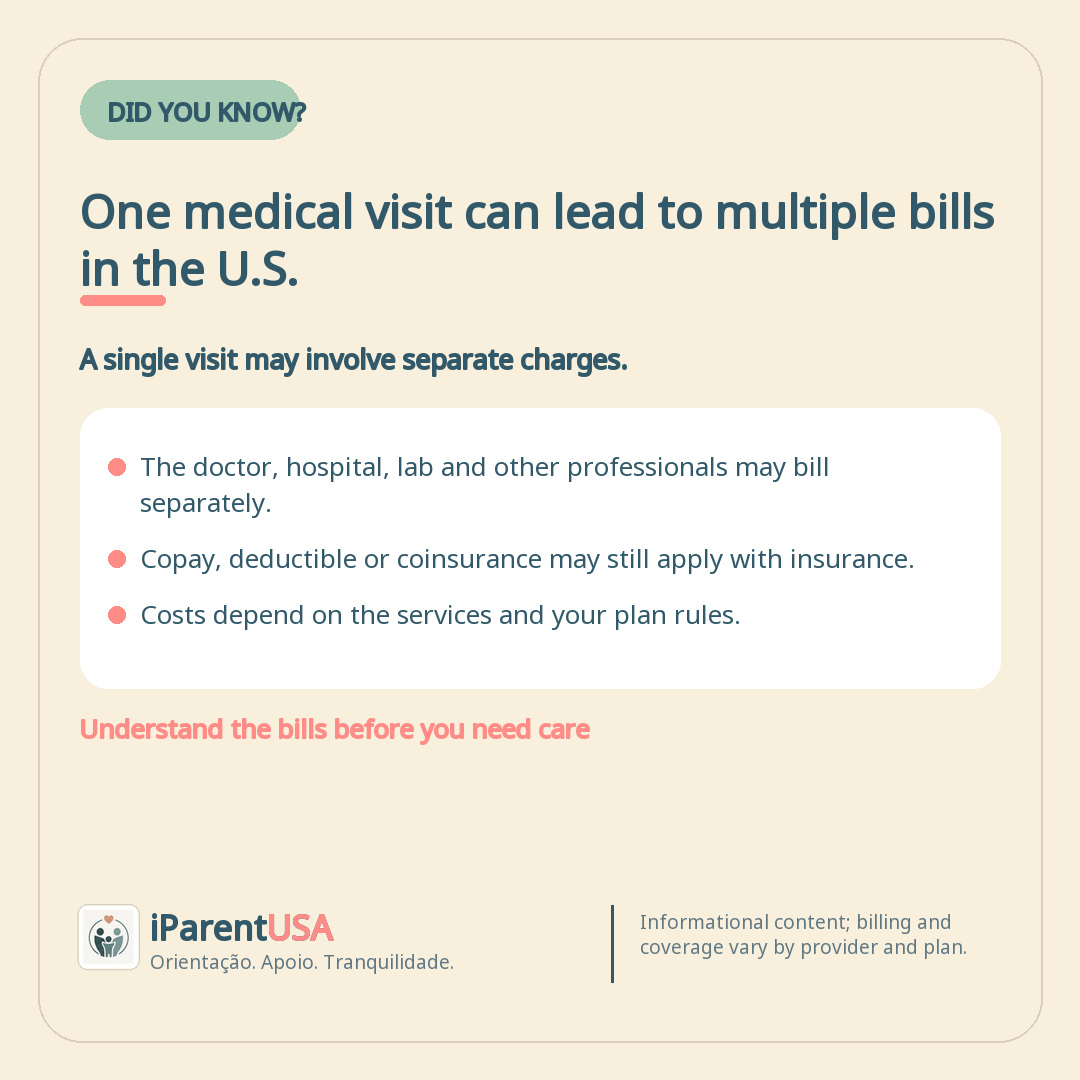
In the United States, one appointment, test, or hospital visit may result in more than one bill. The doctor, hospital or facility, laboratory, radiologist, anesthesiologist, and other professionals may bill separately for their services.
Why bills may arrive separately
Each professional or organization involved in the care may have its own billing system. For example, a hospital may charge for the facility, while the doctor or specialist charges for professional services and the laboratory bills for tests.
Not every visit involves all of these providers, but it is common for charges from one visit to arrive at different times and under different names.
Insurance does not necessarily eliminate your costs
Even when care is covered, a copay, deductible, or coinsurance may apply. The amount depends on the plan, network status, service provided, and how each claim is processed.
An Explanation of Benefits, or EOB, generally shows how the plan processed a claim, but it is not a bill. Compare it with the bills you receive and contact the plan or provider if something is unclear.
How to prepare
Before scheduled care, ask which professionals and facilities will be involved and whether they are in your plan's network. When possible, request an estimate and confirm whether other providers may bill separately.
This content is informational only and does not replace medical, financial, or coverage advice. Billing practices and plan rules vary.
When medical bills arrive, check
- Which provider issued each bill
- Whether the service and date match the care received
- How the plan processed each item on the EOB
- Which amounts are copay, deductible, or coinsurance
- Who to contact with a question or possible error
Want to talk about your family's situation?
Book a free 15-minute consultation or get the free guide to your first 30 days in the United States.
Full guide on this topic: Healthcare
Read next
- Screening vs. diagnostic mammogram: what's the difference?Understand the difference between screening and diagnostic mammograms in the U.S., when each is recommended, and why requirements vary by center.
- Turning 18 changes parents' access to medical information in the U.S.When a child turns 18 in the U.S., parents do not automatically keep access to medical information. Learn why authorizations may matter.
- Some U.S. health plans may cover medical expenses in BrazilLearn why some U.S. health plans may cover or reimburse medical expenses incurred in Brazil, and why it's essential to confirm every detail with your insurer.
- Can you check a doctor's record before booking?Find out where to check complaints, reviews, and licenses for doctors in the U.S. before booking an appointment, and what this research can't replace.