
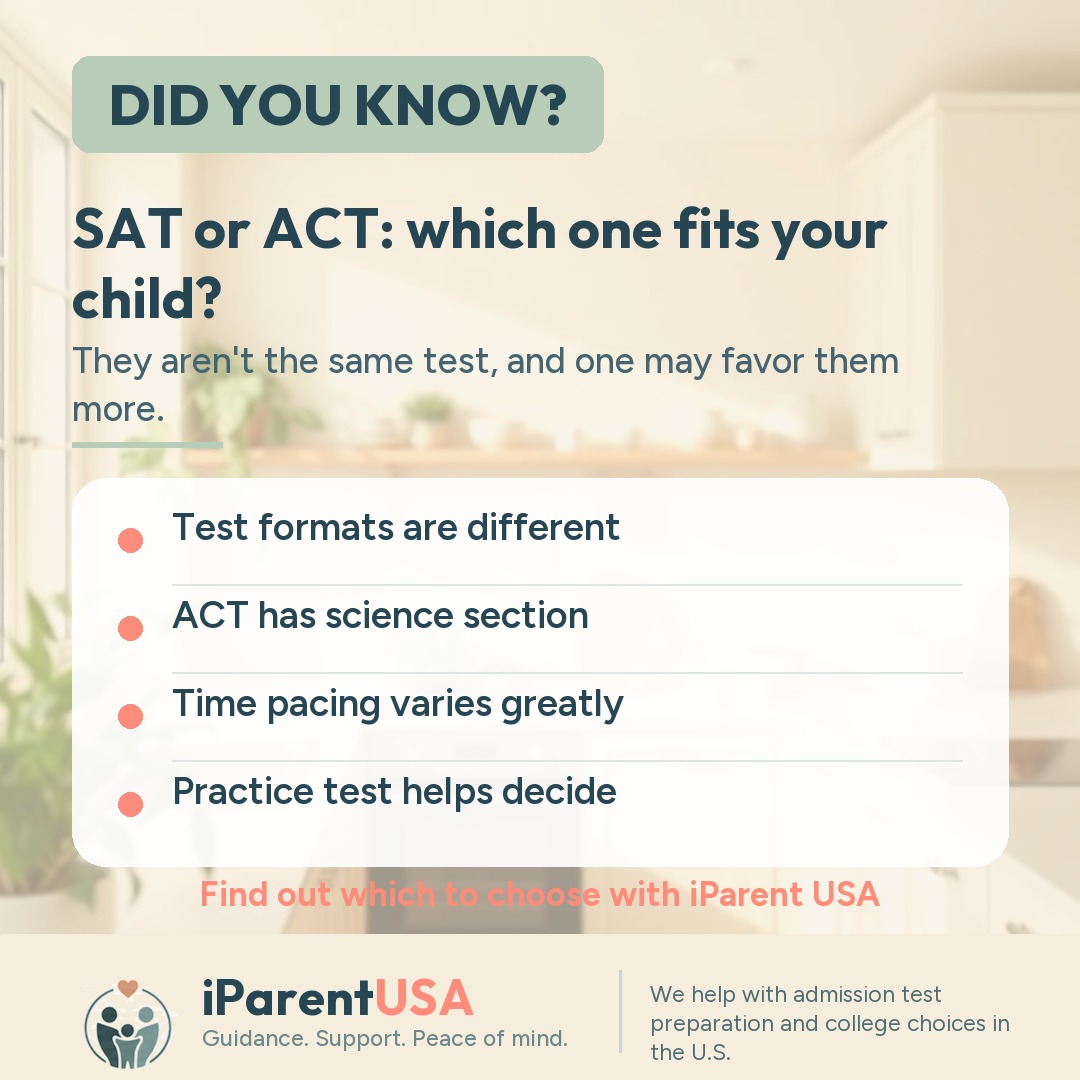
For families new to the U.S., hearing about the SAT and ACT for the first time can feel overwhelming, since most colleges accept either, yet the two tests measure somewhat different skills. Understanding those differences helps direct a student's study time toward the exam where they're more likely to perform well.
How the two tests are structured differently
The SAT tends to have fewer questions and a slightly more relaxed pace per section, with a strong focus on critical reading, grammar, and a math section that allows a calculator for only part of the test. The ACT includes a science section that requires interpreting graphs and data, plus a faster overall pace, which can suit students who work quickly under pressure.
Neither test is inherently 'harder'; the difference lies in the type of reasoning each rewards. Many counselors recommend taking one official practice test of each before deciding where to focus preparation.
How colleges weigh the results
Most U.S. institutions treat the two tests as equivalent and don't state a preference for one over the other. Some colleges have adopted test-optional policies, meaning submitting a score is not required, but this varies by school and can change year to year, so it's worth checking the current policy on each target college's website.
Keep in mind that SAT and ACT scores are just one piece of the admissions picture, alongside GPA, recommendation letters, and extracurricular activities.
Preparing as an international family
Students still adjusting to academic English often benefit from a longer prep window, building vocabulary and reading speed before jumping into timed practice tests. Prep courses, specialized tutors, and free official practice exams are widely used resources among immigrant families.
Check registration deadlines, testing locations, and whether the student may need to request accommodations, which should be arranged well in advance through the College Board or ACT, Inc.
What to review before deciding
- Take one official practice test of each exam to compare performance and comfort.
- Check whether target colleges require, recommend, or waive these tests.
- Confirm registration deadlines and available test dates in your area.
- Factor in the student's comfort with academic English when planning study time.
- Look into whether accommodations need to be requested in advance.
Want to talk about your family's situation?
Book a free 15-minute consultation or get the free guide to your first 30 days in the United States.
Full guide on this topic: College preparation
Read next
- Should college prep start in 8th grade?See why beginning college planning as early as 8th grade can widen your child's options later, and how to build that timeline gradually.
- Can middle-income families apply for college aid too?Learn why FAFSA isn't only for low-income households and how middle-income families in the US may still qualify for some form of college financial aid.
- Are AP and Honors the same thing?Understand the difference between AP and Honors courses in U.S. high schools and how that choice can influence a college application.